Archives: Basic Instinct

Duncan Harrington and “Instinct”.

According to the Collins English Dictionary, “instinct” is an inborn intuitive power.  It’s also the name of the project that Duncan Harrington undertook in his final year as an Industrial Design student, and from which came the innovative motorcycle you see on these pages.  Duncan readily admits that it’s perhaps a misnomer when applied to his well thought out and engineered creation, but it does say something about his own intuition when it comes to questioning the primary and secondary safety of today’s motorcycle designs. But more of that later.

It was at the beginning of the year when 26-year-old Duncan proposed, as just one of his final year’s projects, to produce a motorcycle that would improve upon conventional chassis design and safety.  Unfortunately, the powers to be at the Underdale Campus of the University of South Australia needed a fair bit of persuasion, so the first half of the year was taken up with a research paper into roots and origins of motorcycle culture, which Duncan then used to help justify the project.  This was followed by a whole range of concept designs that were drawn up and presented before one was finally chosen.

Duncan then had to convince the University that he had the technical skills and know-how to complete the project in the time allowed.  Not an easy task with only six months left to do it in.  Fortunately, Duncan had completed an apprenticeship as a fitter and turner with CSR Softwoods in his hometown of Mt. Gambier before going to University and also had quite a few years experience restoring cars and motorcycles at home.
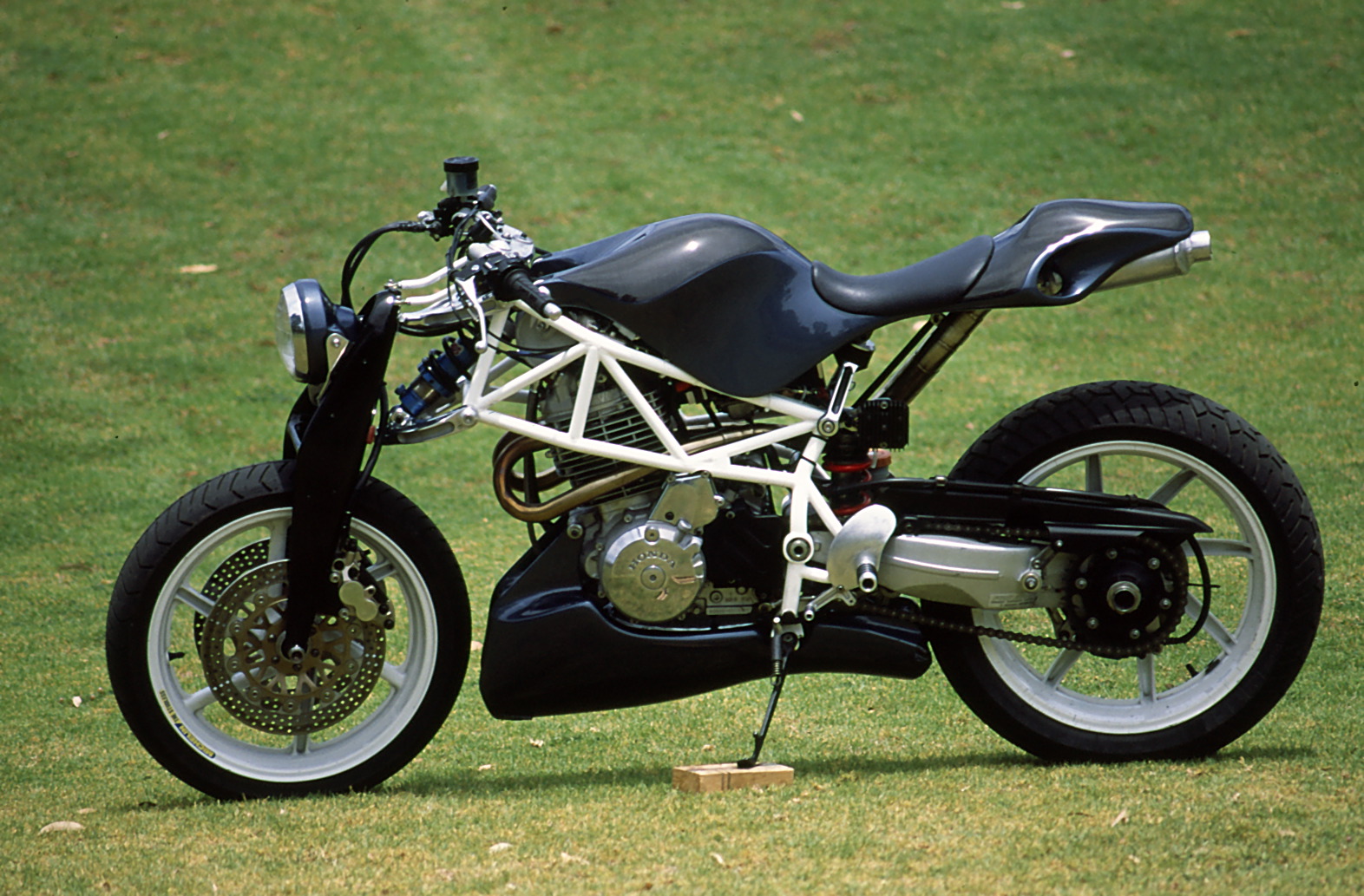
“Instinct oozes quality workmanship.

There was still, however, one more hurdle – finding the money to pay for the materials and components to construct the bike.  A sad farewell was said to Duncan’s bevel drive, square case 750SS Ducati,  when it was sold to help finance the project, followed later in the year by his rebuilt Suzuki Katana. Only the time factor remained, and as Duncan succinctly put it to me, ” I haven’t had a holiday all year!”

But after watching Duncan work meticulously on “Instinct” and listening to him talk about the ideas that went into the bike, I got the distinct impression that this was more than just a final year project. Which is quite understandable considering a large proportion of the bike had been handmade, polished and painted by Duncan.

The first impression of the bike is its high quality of workmanship, and a feeling of familiarity with its layout – the white chrome-moly steel trellis frame, single-sided swingarm and exhaust exiting under the seat is reminiscent of the Ducati 916. Even the exotic double wishbone front suspension has been tried before on other motorcycles like Kiwi John Britten’s V-twin, and the American Hossack (it’s also been experimented with by expatriate South Aussie Tony Foale who by coincidence is distantly related to Duncan).

The under engine fuel tank is also not new and has appeared on some racing motorcycles in the search for a lower centre of gravity – bikes like the Mead and Tompkinson endurance racer, and the French Elf endurance and 500cc G.P. racers.  But perhaps more importantly, it’s the sum of “Instincts” parts and the thinking behind them that makes this motorcycle special – particularly when it comes to selling new ideas to a very conservative bunch of consumers.

Twin wishbone front end is a primary safety feature.

Twin wishbone front end is a primary safety feature.

For example, the use of a more traditional engine design, in the shape of Honda’s venerable big single NSX 650cc motor, is not just merely to keep costs down.  Like most contemporary big singles, the dry-dumped Honda engine is designed to sit high in the frame and “Instinct” utilises this characteristic to enable the fuel tank to be easily mounted underneath it.  The chrome-moly trellis frame was another natural choice, as Duncan has designed it to be made in a kit form to suit most big single-cylinder engines that generally have their mounting point at the cylinder head and above or below the gearbox.  Just as important though, is that this type of frame offers good mounting points for the front wishbone suspension, and it’s also more visually acceptable in the eyes of purists.

The solid looking front “fork” is also made from chrome-moly steel and is encased in carbon-fibre for added torsional stiffness.  This is attached to the two alloy wishbones by a 14mm upper and 16mm lower ball joint that can be adjusted by thread and lock nut to vary the forks rake from a fairly standard 25 degrees to a very steep 18 degrees.  The front suspension also makes use of car type polyurethane bushes, while the double wishbones move on plain bearings in order to keep costs down.

The clip-on style handlebars and top yoke pivot in what looks like a conventional steering head (the lower part of which doubles as the top mounting point for the front shock absorber) and uses two rods with eyeball joints at both ends to attach the steering yoke to the fork. The bottom of the front shock absorber is angled out onto a mount at the front of the lower wishbone.

The shock absorber itself is an American car racing A.V.O. unit, with infinitely adjustable rebound and compression damping.  Duncan found the A.V.O. shock absorbers specification to be very good, and apart from being a lot cheaper than the “name” brand motorcycle type, it can also be purchased as a single unit with the added bonus of different rate springs being available for a mere $30.

The fuel tank is a carbon fibre, glass fibre and kevlar composite, wrapped around aluminium side panels and inner bulkheads that also act as baffles to stop the 18 litres of fuel sloshing around.  A reliable solid state Facet electric pump is mounted down by the petrol tank and takes care of the fuel supply to the carby.

The dummy tank and seat unit are made from injected high-density polystyrene that incorporates aluminium plates for strength at its mounting points and is wrapped in overlapping layers of carbon and glass fibre, again to add strength.  The whole thing pivots upwards at the front for good access to the battery, cylinder head and oil tank, although the oil tank cap is also easily accessible even with the dummy tank unit in place.
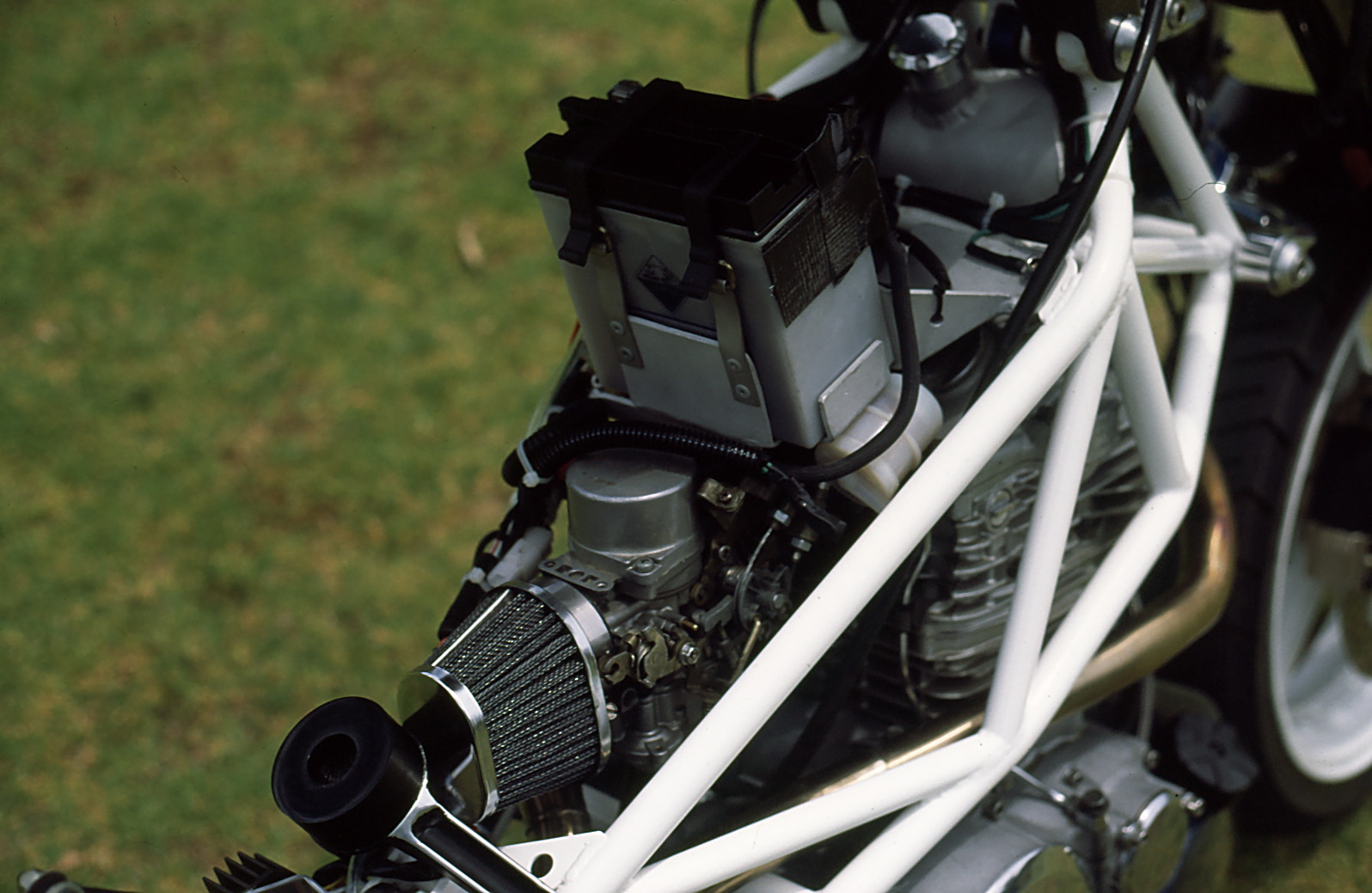
The seat and dummy fuel tank pivot forward for good access to the battery cylinder head and oil tank.

The seat and dummy fuel tank pivot forward for good access to the battery cylinder head and oil tank.

The seat itself is sculptured from a thin rubber base and covered in vinyl before being glued in place.  Another interesting feature of the dummy tank/seat unit is its single rear mounting point.  This is directly below the seat and uses urethane bush to help the thinly padded perch absorb some of the road shocks.  The paint job is also a local product called Two-pack Pro-Tech polyurethane and is used by HSV on the Commodore.

Duncan also made the stainless steel exhaust system, (apart from two one hundred and eighty-degree bands in the header pipes just after they exit the twin-port head, courtesy of Pace Maker Exhausts) and the aluminium muffler.  When viewed from the rear the muffler combines with the seats tail-piece to look uncannily like a snakes head!

Underseat exhaust is neat and tidy.

Underseat exhaust is neat and tidy.

As mentioned earlier the bike was designed to be built in a kit form and can use a variety of single cylinder engines, rear suspension, swing arms, wheels and brakes.  On Duncan’s prototype, these were cannibalised from a 400cc V-Four Honda NC 30.  A special thanks has to go to Alan Rigby Motorcycle Service in Mt. Gambier who supplied the wheels and tyres for just $300, including the cost of sending them to Adelaide.

This brings us to how Duncan Harrington’s design has improved primary and secondary safety over the latest motorcycle designs from the worlds largest manufacturers.  Well, not surprisingly, there first came an intensive study of motorcycle design, followed by extensive research into motorcycle accidents, which included material supplied by Adelaide Universities renowned Road Accident Research Unit.

To improve primary safety ,two things had to be accomplished that in general terms are contrary to each other – manoeuvrability and stability, which in most modern motorcycle designs is at best a compromise.  Duncan got his design off to a good start in the manoeuvrability stakes with a wheelbase of just 1380mm, helped by a light weight of 140kg with oil but no fuel.  This compares well with the likes of Suzuki’s 250cc RGV two-stroke (they also share similar power to weight ratio’s), but where “Instinct” shines is with its lower centre of gravity, thanks to the underslung fuel tank, and also by keeping the centre of mass as close to the middle of the bike as possible.

The other innovation that Duncan’s bike has over conventional designs is the improved stability achieved by taking advantage of mechanical characteristics of a twin-wishbone front suspension.  With a conventional telescopic front fork even normal braking will cause them to compress and effectively shorten the wheelbase.  Combine this with turning into a corner, which rolls the contact patch across the curved tread away from the centre crown of the tyre to the smaller diameter shoulder, and you reduce the wheelbase further to undermine stability even more.
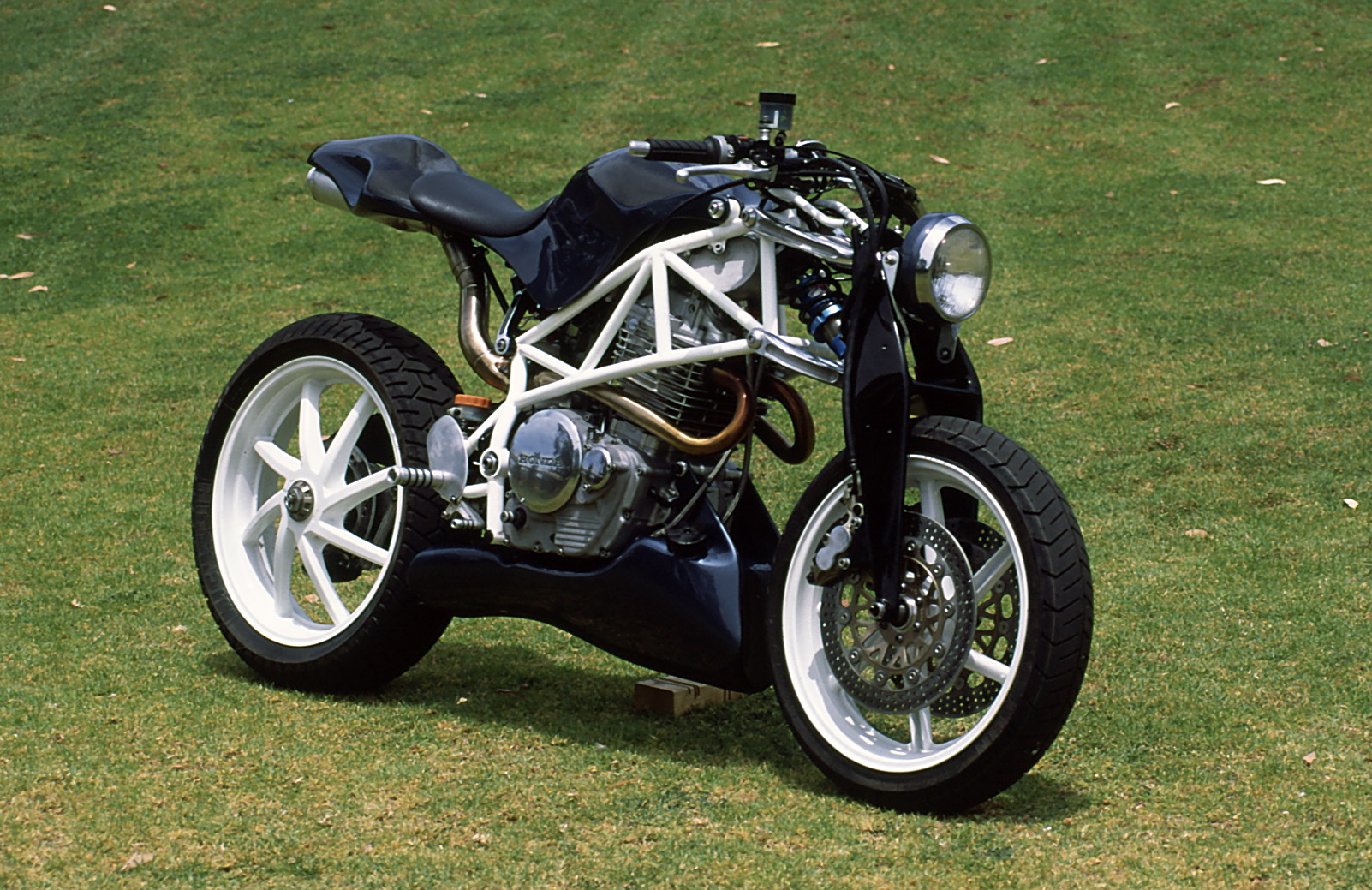
"Instinct" looks good from any angle.

“Instinct” looks good from any angle.

When “Instinct’s” front suspension system is compressed under braking (or over bumps), the twin-wishbones move through an arc which slightly increases the wheelbase and also helps compensate for the decreasing diameter of the tyres when leant over in a corner.  Another safety benefit with the twin-wishbone front end is that it rides over bumps a lot better as there is none of the stiction associated with a conventional telescopic fork, and the inbuilt stability of the system makes it more difficult for large bumps and potholes in the road to unsettle the motorcycle.  Duncan is still in the process of getting “Instinct” road registered (mudguards, lights and a speedo are all that’s needed), but has managed to put in some exploratory laps at the Mallala race track, and these have more than confirmed his faith in the design.

Just as impressive though are the secondary safety features of Duncan’s design.  From his research, he found that the front end t-bone was one of the most common accidents happening to motorcyclists and that there was a marked increase in the number of injuries to the lower abdominal region of the rider, whom according to the statistics are mainly males under 25.  Not good for the family jewels.  It was discovered that the increasing size of air boxes on motorcycles to help manufacturers meet noise pollution and performance requirements, were also increasing the height and width of fuel tanks with the aforementioned consequences.

By using an underslung fuel tank on “Instinct”, Duncan was able to go “organic” with the design of the dummy tank and seat unit, allowing it to be made lower in height and narrower in width as it is purely for styling.  The next problem our poor crash victim faces once he makes it past the fuel tank are the handlebars.  These have a nasty habit of shattering parts of the lower leg, which most definitely is not something to look forward to while holding onto one’s crotch.

Shear pins are used to secure the handlebars in place.

Shear pins are used to secure the handlebars in place.

Duncan has solved this problem by using shear pins through the steering yoke to lock “Instinct’s” handlebars in place.  As the name suggests the pins will shear when hit with a reasonable force, causing the handlebars to pivot forward and away, thereby saving the rider from a more serious leg injury.  While we’re on the subject of lower legs, Duncan has also made the foot pegs solid and mounted them at bumper bar height as he believes this offers better protection from errant car drivers than the swivel up type, which are more likely to cause the riders lower leg to be squashed in an accident.

Perhaps more than anything Duncan’s design project highlights how almost laughingly obvious some of the solutions are to the inherent problems built into the traditional motorcycle, and just as equally, how conservative motorcyclists are when it comes to accepting new technology.  Ask anyone at Yamaha involved with the GTS 1000.  Even the successful BMW R1100RS incorporates a sliding fork un its single wishbone front-end, not only as a necessary part of the design but also, no doubt, so as not to scare away too many traditionalists.

Will weever see it in production.

Will we ever see it in production?

In Duncan’s case, he has taken a step backwards to go forward by basing his design on a simple, reliable, single cylinder engine, and of course, a tubular steel frame to help package his concepts.  Although “Instinct” is designed to be built in a kit form, it, unfortunately, is beyond Duncan’s means to manufacture and market the design in any realistic numbers.  Let’s just hope there’s a manufacturer out there with enough foresight to prevent such an interesting and practical design becoming more than just another one off special.

Words and photographs Geoff Dawes (c) 1994. Published in Streetbike  April/May 1995.

The Rise Of Marc Marquez.

Two 20-year-old MotoGP winners. Marquez the youngest ever by 133 days.

The temptation to compare great Grand Prix motorcycle racers from different eras is almost impossible to resist for many MotoGP commentators.  Admittedly, it does help generate increased interest from the media, the fans, and the general public, but grabs of history both past and present that align nicely do not necessarily make for a fair comparison or do justice to those involved.

Marc Marquez has already claimed the mantle of the youngest winner of a MotoGP at age 20 by 133 days from “fast” Freddie Spencer. In 1983 Spencer went on to win his first  World Championship aged 21 years in the 500cc class (MotoGP) becoming the youngest person to win the title.  Marquez appears to be on course to wrest that achievement away from Spencer as well, currently leading the MotoGP World Championship with six rounds to go as this is written. However in 1985 at the age of 24 Spencer won both the 250cc (Moto2) and 500cc (MotoGP) World Championships, something that no other rider has done, and is a feat that is unlikely to ever be repeated. It should also be noted that Marquez started racing in the 125cc World Championship in 2008 when he was 15 and has won both the 125cc (Moto3) World Championship and the Moto2 World Championship, although he was not the youngest champion of either of those two classes.

Freddie Spencer the youngest MotoGp World Champion at 21.

Freddie Spencer the youngest MotoGP World Champion at 21.

The same commentators are also espousing that rookie Marquez may win the MotoGP title in his first year. The last person to achieve this was Kenny Roberts 35 years ago in 1978. But here there is a rather significant difference in circumstance between Roberts achievement and that of Marquez should he attain the title.

Roberts World Championship effort was backed by Yamaha America,  who only supplied his team with equipment. This consisted of three different GP racers for the three different classes Roberts was contesting. Formula 750, 500cc GP and 250cc GP – one machine for each class with no spare bikes. His crew chief was expatriate Australian, Kel Carruthers, a former 250cc World Champion and a mentor to Roberts, accompanied by mechanics Nobby Clark, Trevor Tilbury and a Yamaha technician. Roberts had helped develop Goodyear’s racing tyres in the States, and it was the American company that put up the money that was needed to go racing in Europe. Goodyear naturally supplied the tyres.

The situation was not an ideal one as Roberts explains, “When we got to our first race it became crystal clear that, for sure, I wasn’t a Yamaha factory rider. Venezuelan rider Johnny Cecotto was. It wasn’t hard to tell; all we had to do was look at his equipment and then look at ours. We did have a Yamaha engineer by the name of Mikawa, and at some races, we also had a Goodyear technician. But it was us against the factory, really.”

'78 World Champion Kenny Roberts at the '79 French G.P. at Le Mans,

’78 World Champion Kenny Roberts at the ’79 French G.P. at Le Mans,

“So ’78 was a piece of work. I was riding 250 and 500 Grand Prix and Formula 750 as well. We had just one bike per class; no backup bikes. At practically every race it was my first look at the track. Usually, all I had was 30 minutes to figure it out. And not just the track, everything–the right lines, bike setup and tire selection, if there was any. There I was, aiming to beat reigning World Champion Barry Sheene, who’d usually seen the track a dozen times before. And we were on Goodyear tires. We were on our own there, too, because nearly everyone else was on Michelins. I swear, some things never change! To say the Goodyear guys had their hands full is to understate the problems we faced. Usually, the Goodyear guys would show up at a track they’d never seen before, which meant they didn’t have the right tires. That’s a nightmare you really don’t want to deal with. But deal with it we did.”

Roberts wen ton to win a hat-trick of 500cc World Championships.

Roberts went on to win a hat-trick of 500cc World Championships.

Nonetheless, Goodyear eventually weighed in with more development tyres, and Yamaha finally supplied Roberts with a second bike for the 500cc GP class. Roberts dropped the 250cc title challenge after winning two races and at one stage leading the championship, finally finishing fourth in the standings.  Roberts continued on with the Formula 750cc World Championship finishing second in the title five points behind Johnny Cecotto. But Roberts won the 500cc GP (MotoGP) World Championship by 10 points from Barry Sheene against a flotilla of factory Suzuki’s and the works Yamaha of  Johnny Cecotto. It was an outstanding achievement.

Marc Marquez in action. A future multi MotoGp WorldChampion ?

Marc Marquez in action. A future multi MotoGP World Champion?

By comparison, Marc Marquez has raced in the world championships for five years now. In MotoGP, there is only one track that was new to him, Laguna Seca (The Circuit of the Americas was new to everyone in MotoGP this year). As a World Championship prodigy in the smaller classes, he has been groomed by both Repsol and Honda to fit seamlessly into the retired Casey Stoner’s seat at the team. With a dearth of experience from the team around him and mountain of electronic data to relate to and the use of control tyres, the only thing that can stop Marquez from claiming the title may be fate. He has proven he is fearless and usually comes out on top when pressured by his peers. Indeed if there is a similarity between Marc Marquez and Kenny Roberts championship campaign, it is the fact that they are both real racers in every sense of the word. And there is no doubt in anyone’s mind that Marquez will continue to break records.

Words Geoff Dawes (c) 2013. Images courtesy http://www.motogp.com

Read more: http://www.motorcyclistonline.com/features/122_0503_kenny_roberts/#ixzz2dn69hATZ

Archives: Holden’s 50th Anniversary

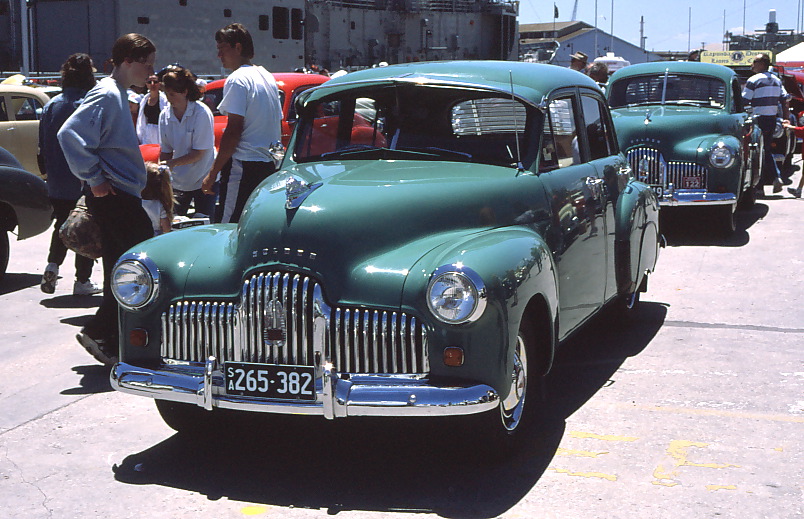
‘She’s a beauty” the 48-215 Holden or more commonly the FX.

While most of the world, including Australia, has this year celebrated the Golden Jubilee of motoring landmarks such as the first Porsche car, the birth of the Land Rover and Jaguar XK series engine, down under it was an Aussie icon that stole the show.  November 29th, 1998 saw Holden Australia celebrate 50 years of car manufacturer, with special events being held across the country.

The company was founded in 1856 by James Alexander Holden, who migrated from Staffordshire in England and set up a saddlery business in Adelaide.  His son Henry became a partner in 1883 and in 1887 the company merged with Adolf Frost, a carriage builder.  In 1917 Holden and Frost Ltd. was approached to build bodies for imported Dodge chassis’ due to the Australian Governments import embargo legislation on complete cars.  In 1923 General Motors announced that they would use Holden as a sole body supplier, eventually purchasing Holden Motor Body Builders at Woodville in South Australia in 1931.

But it was towards the end of the second world war that the Australian Government decided it was time for an entirely Australian built car, and General Motors Holden was considered best positioned to build it.  GM-H rose to the challenge, being fortunate that an existing Chevrolet design almost fit the bill before it was re-engineered to suit local conditions and restyled by GM-H designers to suit Australian tastes.

Holden 50th Celebration Fishermen’s Wharf Port Adelaide.

With a loan of 3 million pounds from the Commonwealth Bank and the Bank of South Australia, GM-H started to tool up it’s Fishermen’s Bend (Victoria), and Woodville (South Australia) plants for production of the six-cylinder 48-215 model Holden that would commonly be known as the FX.  The first 48-215 rolled of the productions lines at Fishermen’s Bend on November the 29th 1948 and was greeted by the words, “She’s a beauty!” from the then Prime Minister, Ben Chifley. The locally made car went on to top the sales charts and receive the enormous public acceptance that made it an Aussie icon.

The celebration of GM-H’s achievements was headed by a re-enactment of the first 48-215 rolling off the assembly line in the presence of Australia’s current Prime Minister, John Howard.  The ceremony was aptly held in the Fishermen’s Bend plants Social Hall and was attended by some of the original engineers who worked on the project.

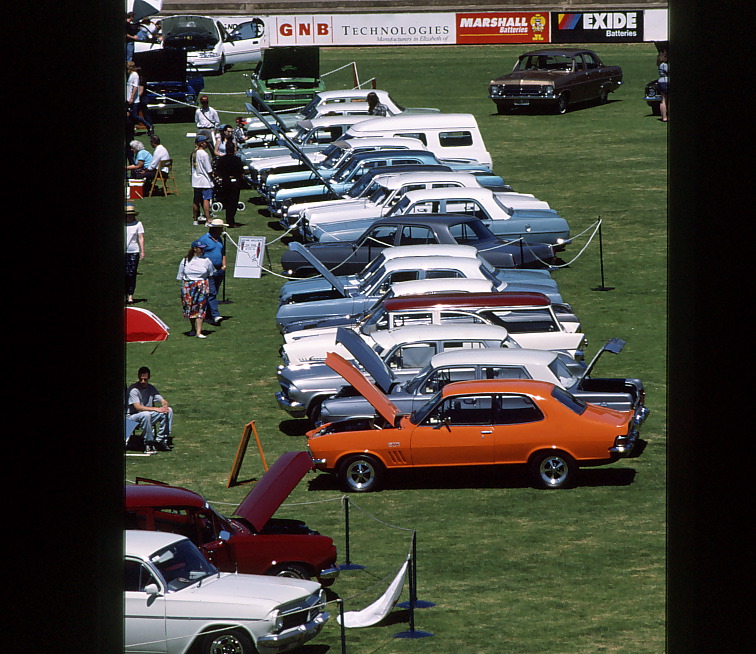
Holden's on display at Elizabeth Oval.

Holden’s on display at Elizabeth Oval.

In South Australia, there was a display of over one hundred different model FX, and FJ Holden’s on Fisherman’s Wharf at Port Adelaide, not far from the now disused Woodville plant.  While at the Elizabeth plant, which is now Holden’s single vehicle manufacturing plant in Australia, there were guided tours for the public to see how Australia’s number one selling family car, the VT Commodore is made.

At Elizabeth Oval, there was an all Holden day with a wide variety of models on display, with many similar events being held around the country.

Words and photographs Geoff Dawes.(C) 1998. Published in Classic and Sports Car (UK) 1998.

Archives: Kawasaki Z1 Super 4

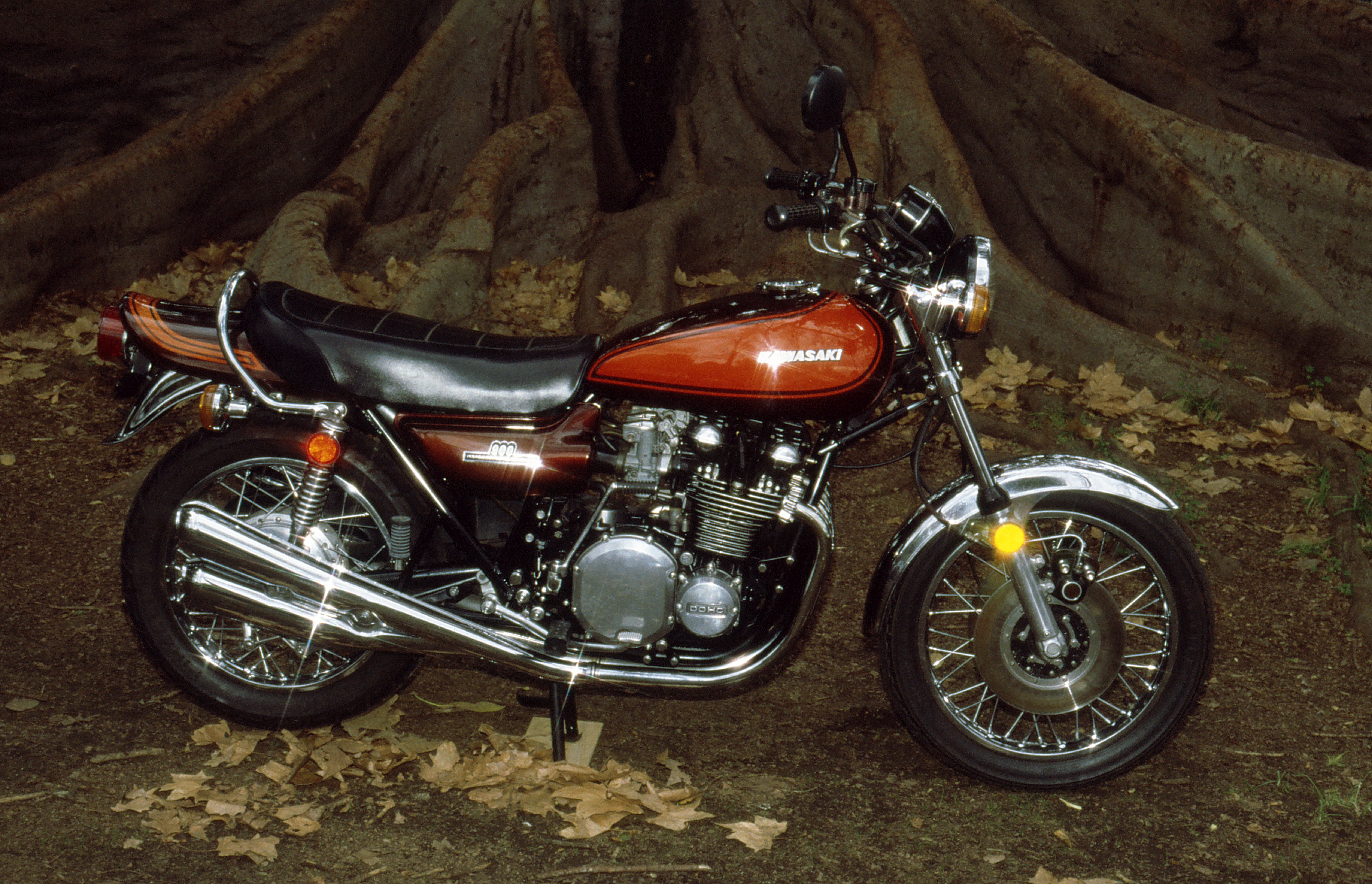
The Z1 had a majestic presence

When Honda unveiled the CB750 at the Tokyo Motor Show in 1968, it immediately captured the imagination of the motorcycling public.  It would become the first mass-produced, large capacity, across the frame, O.H.C. four-cylinder motorcycle.  And it also boasted another motorcycling first, a front disc brake.  But just as importantly, it would be affordable for the general public to buy.

The CB750 was a technological tour de force that set a new benchmark for the other manufacturers to match.  When it hit the showroom floor a year later, it set a precedent in large capacity motorcycle design that has lasted to this day.

But if the Honda “four” captured the public’s imagination, then the Kawasaki Z1 super4 stole it.

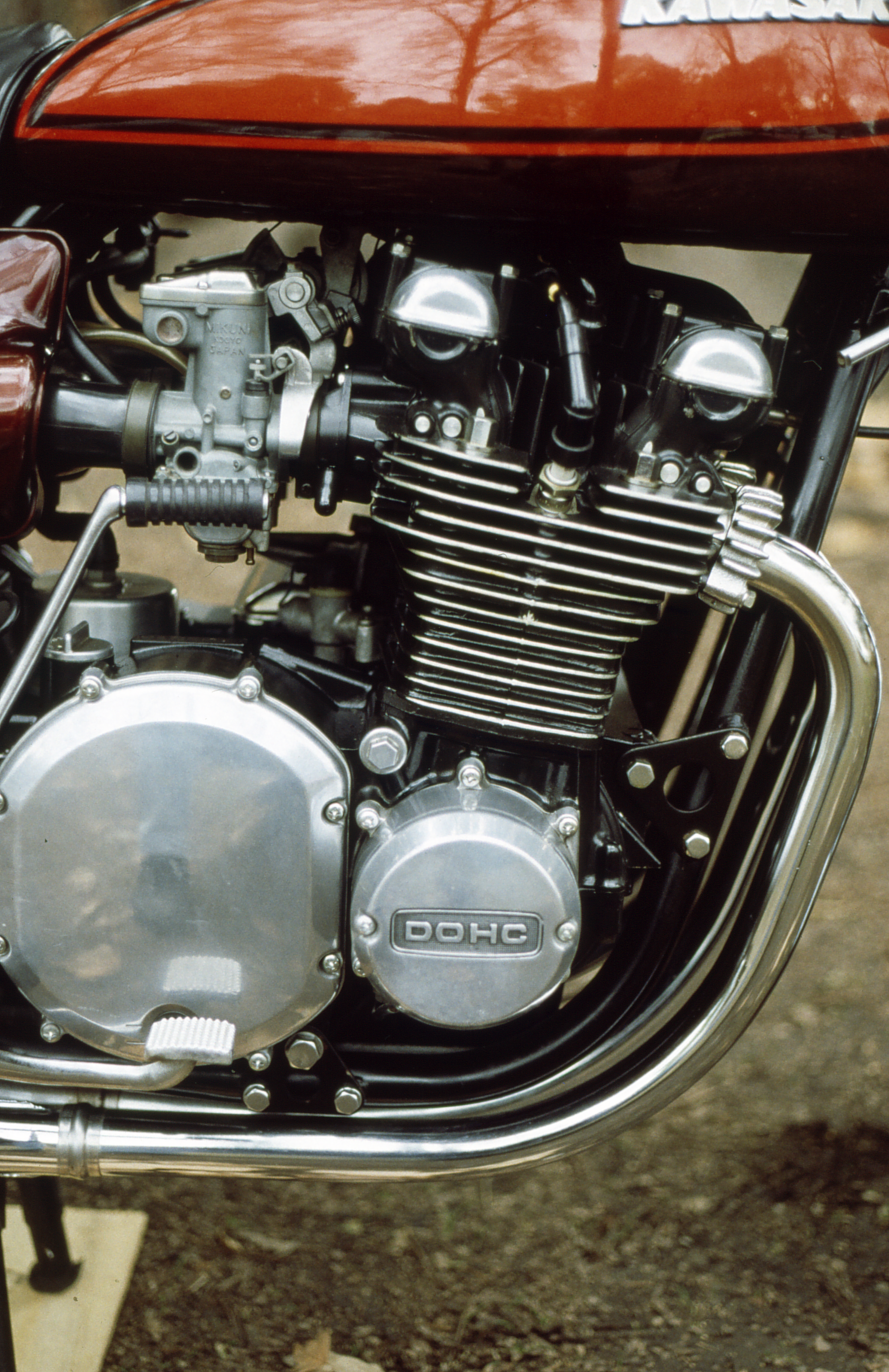
Conceived in 1967 after intensive research by Japanese-American Sam Tanegashima into the needs of the world’s most important motorcycle market, the United States, Kawasaki set its design parameters for a new large capacity motorcycle.  Its heart was to be a compact D.O.H.C. 750cc four-cylinder engine that placed emphasis on lower exhaust emissions and running noise.  The project had reached wooden mock-up stage by September of 1968 only to be still-born when Honda revealed the similar in concept CB750.  But although this blow initially shelved the project, code-named “New York Steak”, it also proved useful to Kawasaki.  They could now gauge market reaction to the big Honda, and in 1969 another intensive survey of the U.S. was undertaken.

Z1 final mockup courtesy Kawasaki Australia

Later that year the final decision was made.  The small team involved in the project, Mr Inamura and Mr Togashi, (chief engineers for the engine and chassis) and Mr Tada, (chief designer) were told “New York Steak” would go ahead.  But Kawasaki’s re-evaluation had concluded that the engine capacity should be 900cc.  This created a new niche in the large capacity motorcycle market, and Kawasaki would regain the mantle, formerly held by its W series 650cc twin, as the largest capacity motorcycle on offer from Japan.

The real challenge for the engineering and design team, however, was to meet Kawasaki’s ultimatum to have the new bike ready for final testing within 24 months.  Although a lot of groundwork had already been done, with over $800,000 invested in development costs for the 750cc version, the timetable was still a tough one.

In the Japanese spring of 1970 the first prototype hit the demanding Yatabe test course, and in the hands of its American test rider lapped at an incredible average speed of 200kph.  There were problems though, the crankcase breather system let oil out instead of keeping it in, and piston crowns succumbed to the intense heat of combustion.  But the issues were rectified, and rewarded, with one prototype recording 95bhp and a top speed run of 225kph.

Z1 final prototype (curtesy Kawasaki Australia)

Z1 final prototype (courtesy Kawasaki Australia)

In January 1972 pre-productions models were shipped to Los Angeles for testing on public roads.  On a round trip to Daytona in Florida, they covered over 20,000km which included endurance testing on road race circuits.  Apart from some minor chain and tyre problems, they proved the reliability of Kawasaki’s design.  Not content with this, Kawasaki returned to the States three months later for more extensive tests.   The results even surpassed Kawasaki’s own expectations.

It was time to go public, and in June 1972 the worlds motorcycle press were invited to Japan by Kawasaki.  The Z1 super4 was officially announced and opinions of the motorcycle, both good and bad, were eagerly sought – if Kawasaki were to beat Honda at their own game everything had to be right.  By August the production lines were readied, now it was up to the marketing men.

Press release from Mr. Yamada (courtesy Kawasaki Australia)

Press release from Mr Yamada (courtesy Kawasaki Australia)

In September 1972 the Z1 was launched at the Cologne Motor Show while in Japan the production lines started to roll, building a conservative 1500 units per month. The Kawasaki design team held their collective breath while they waited to gauge market reaction to the new model.  There was no need to worry, the Z1 super4 took the show by storm, as it did the other European shows that followed.  By 1975 Kawasaki would be building 5000 units per month.

It was the demands of the tough American market that had fathered the Z1, and something special was in store to underline the muscle-bound roadsters capabilities.  In March 1973 a team of riders, mechanics and officials, arrived at Daytona Motor Speedway.  Their aim, to set new speed and endurance records for a production motorcycle.  Three days later they had established 46 F.I.M. and A.M.A. records including a new 24-hour record for a production motorcycle of 176.412km/h.

Paul Cawthorne on the Bolton's Z1

Paul Cawthorne on the Bolton’s Kawasaki Z1.

Later that year, at its first attempt, the Kawasaki Z1 came second, fourth and fifth in the gruelling Bol d’Or 24 hour endurance race, while in Australia, after an epic solo ride, Kenny Blake won the prestigious Castrol Six-Hour production race.  The opening chapter of a legend had been written.

Z1 Technical File

“You can design the most beautiful motorcycle in the world, but if it doesn’t have the right engine, there’s no way you can make a complete package.  Therefore, in all our bike development, the first consideration is the engine.” – Mr Inamura Chief Engineer Four-Stroke Engines, responsible for the Z1.

In the four years before the launch of the Z1, the Honda CB750 had established itself as the yardstick that other large capacity “sports tourers” were judged by.  But although the contemporary Honda engine set the trend for an across-the-frame four, the technical specification between it and the Z1 was poles apart.

The CB750 boasted a single overhead camshaft with the valves actuated by rocker arms and adjusted by screw and lock nut.  It had a bore and stroke of 61mm x 63mm with two-piece connecting rods that bolted together on a forged one-piece crankshaft which was supported by five plain main bearings.  The primary drive was by dual sprockets and two single row chains, while the engine oil was supplied from a separate oil tank mounted under the frames side cover to a “dry” sump.  It produced a maximum of 67bhp at 8,000rpm and 6.1kg-m of torque at 7,000rpm.

Bullet proof.

Bullet-proof.

The Z1, on the other hand, featured twin overhead camshafts that operated directly onto the valve via a “bucket” which used different thickness metal shims located on the top of it to adjust valve clearance.  It had a “square” bore and stroke of 66mm x 66mm, while the crankshaft was a pressed up five-piece unit that allowed the use of one-piece connecting rods.  The crankshaft was supported by six caged roller main bearings that required only low oil pressure to spin freely.  The lubrication system was by wet sump, while the primary drive used a straight cut gear on the crankshaft web and turned directly on the clutch.  The Z1 produced a whopping 82bhp at 8,500rpm and 7.5kg-m at 7000rpm.  It was also a very compact design – over 7.6cm narrower than the Honda.

Both engines were sound designs and relatively under-stressed, and both responded well to tuning, but it was the D.O.H.C. design of the big Kawasaki that had the edge.  During Kawasaki’s record-breaking blitz at Daytona, a stock Z1 with slightly modified camshafts and cylinder head, different carburettors and a four into one exhaust system, produced 105bhp at 10,500rpm.  French Canadian road racer, Yvonne Du Hamel, used this bike (fitted with full fairing, race seat, clip-ons and slicks) to set a new closed course flying one lap record of 257.9km/h.  Its top speed on the straight was 280km/h!

Factory dynometer readings for the Z1 9courtesy Kawasaki Australia0

Factory dynometer readings for the Z1 (courtesy Kawasaki Australia)

But the outright performance was not the only consideration that had to be made by the engine team.  The tightening pollution regulations in the US, particularly in California, required contemplation.  Mr Inamura and his group took a leaf out of the auto industries book and came up with PCV, Positive Crankcase Ventilation.  This was a means of recirculating “blow-by gasses”, mainly unburnt fuel that passes the piston rings and enters the crankcase.  These gasses can contaminate engine oil and were usually vented by a crankcase breather into the atmosphere.  The PVC valve allowed the gasses to be separated and vented from the crankcase back into the airbox to be re-burned, bringing about a claimed 40% reduction in hydrocarbon emissions.

Another feature of the engine design was hardened valve seats and phosphor bronze valve guides, which allowed the Z1 to run on unleaded fuel.  The valve guides, however, were found to wear rapidly enough for the factory to replace them in later models with iron items.

The Z1 engine quickly became the favourite of performance tuners around the world and established itself as the engine to beat.  From endurance racing to drag racing the Z1 engine proved almost unbreakable.  Perhaps the greatest form of flattery is imitation, a compliment paid by Suzuki when it introduced its first large capacity multi-cylinder four-stroke street bike with the GS range that featured an engine configuration almost identical to the Z1.

MEMORIES OF A ZED

In the early seventies, Australia was in the grip of the worldwide boom in motorcycle sales.  Two-wheeled transport became so popular that car dealers took on motorcycle franchises as a sideline to their passenger car sales.  It was into this buoyant environment that Kawasaki launched its new “super4”, and with their first shot, they hit the bullseye.

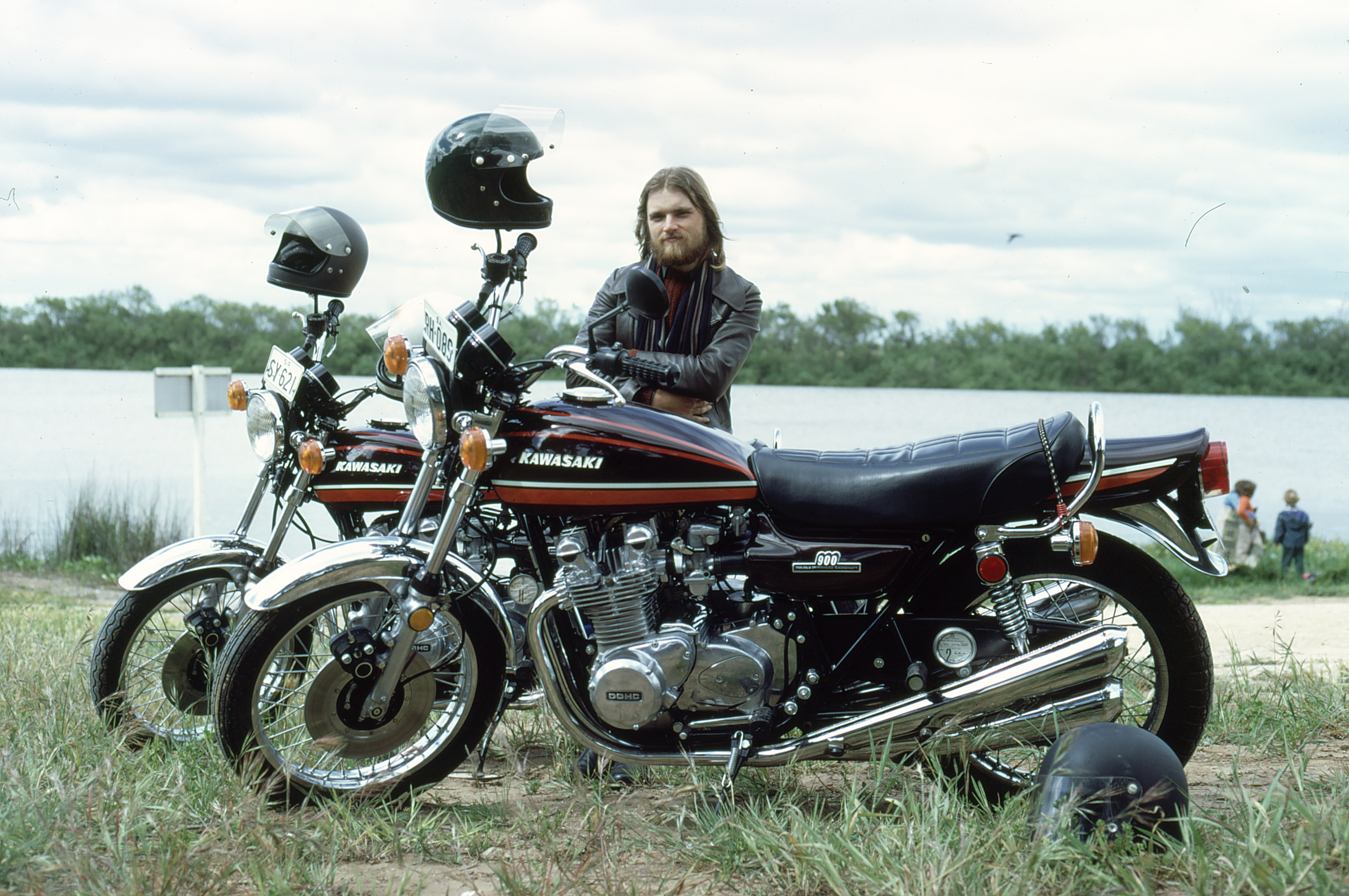
Author and his 1973 Z1A.

Author and his 1973 Z1A.

Never had a motorcycle been more anticipated in Australia than the Z1.  The American magazines were full of superlatives about the big new muscle bike before it arrived on Australian shores, and when it did, it received the same kind of acclaim from the local press.  There were some reservations about the big Kawasaki’s handling under duress, but remember, this was the most powerful production motorcycle in the world!  Not only could it cut the standing 400 metres in 12 seconds flat, but it had an amazing (for 1972) top speed of 217km/h.

Bolton’s, the South Australian distributor for Kawasaki, displayed the Z1 in the window of its Greenhill Road showroom with a sign that was in keeping with factory publicity, and boldly stated, “for experienced riders only”.  That sign did little to deter would-be purchasers, if anything, it just underlined the performance of the big Kawasaki.

It should be remembered though, that in 1972 it was not unusual for Japanese motorcycles to have some “interesting” handling traits.  Most Oriental motorcycles were fitted with home brand tyres that quickly qualified for the title “rim protectors” as they were good for little else.  Japanese suspension manufacturers had yet to master the art of effective compression and rebound damping, especially on the new breed of heavy big bore motorcycles coming from the land of the rising sun.

IMG_0006

A superbike superstar.

All of the above though was pretty academic.  It was the outright performance of these new machines that were all important and the engine technology that provided it.  Plus a build quality, finish and reliability that made the minuses much easier to live with. And there was nothing quite like the sound of a Honda CB750 with all four baffles out, that is until the Z1 came along…

The big Kawasaki exasperated problems with the chassis technology of the day, simply because it was heavy (209kg dry) and so powerful.  It should be noted that even the European tyre manufacturers were not prepared for the Z1 and it soon started a race to produce more suitable rubber.  English tyre manufacturer, Avon, was one of the first with their “Roadrunner” range and quickly developed a presence in production racing, which was by then dominated by the Z1.

For the average owner to improve a Z1, it merely meant replacing the standard rubber for a set of Avon’s, trading the original shocks for some Koni’s, plus experimenting with different front fork oil. Fitting an adjustable Kawasaki steering damper also helped.  All the above made an improvement and it was possible to use up more of the Kawasaki’s good ground clearance during a Sunday blast.  But somewhere along the way, the Z1 would always remind you that it was still one big heavy motorcycle.

Kawasaki’s publicity called the Z1 super4 a super sports tourer, and it was ably suited to that role.  With two-up and luggage onboard the bike could eat up the miles effortlessly, with 4500rpm in top equating to 110km/h and returning around 6 litres per 100km fuel consumption.  The Z1 did suffer some shortcomings – the standard handlebars were too high and wide, making the rider a wind sock at speed.  At cruising speeds secondary engine vibration could be felt, although on its own it was not really a problem, but combined with the hard plastic hand-grips, it became hand numbing after a while.  Also, the seat was too narrow at the front and a bit too firm over long distances.

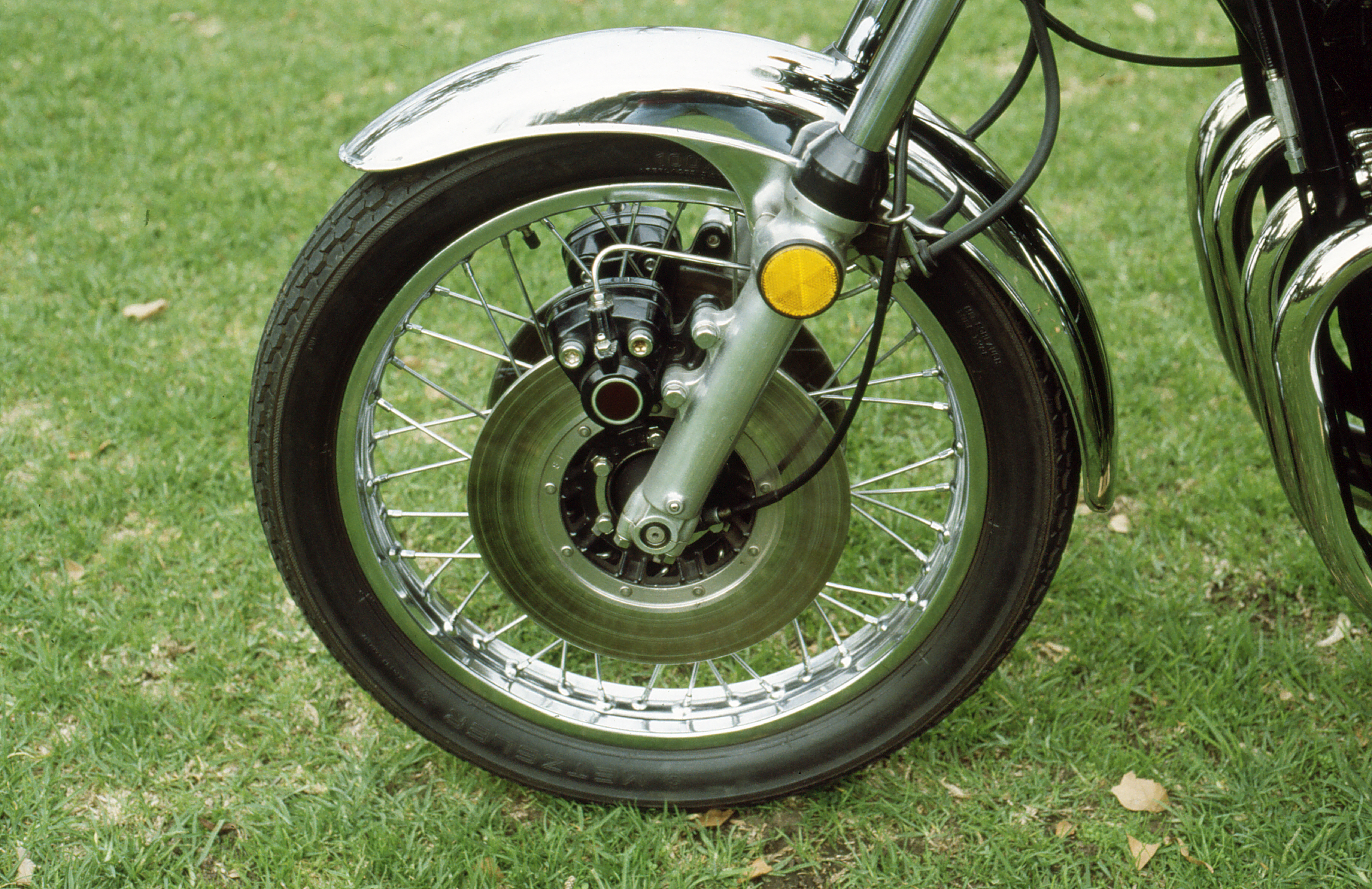
Another gripe was the front disk brake.  It had a high content of the stainless steel, which prevented it from rusting – unfortunately when it rained and the brakes were applied nothing much happened!  A makeshift solution was to drill holes in the disk which helped dissipate the water more quickly.  It was a problem that sent Kawasaki on a search for better brake pad material and is responsible for the superior sintered metal pads we enjoy today.

Twin disk brake was an option.

Twin disk brake was an option.

General maintenance of the big Kawasaki was pretty straightforward and well within reach of the home mechanic.  A relatively inexpensive special tool was required to allow shims to be changed for valve clearance, and a set of vacuum gauges made synchronising the carburettors easier.  Unlike the CB750, Kawasaki had designed the Z1 so the cylinder head and barrels could be removed with the engine still in the frame, in fact, it was only in the rare occurrence of the crankshaft or gearbox needing attention that the engine had to be removed.

Although the Z1 was fitted with the heaviest duty chain available (630), an adjustable automatic chain oiler was fitted to help extend its life.  An oil tank under the left side cover fed a plunger type oil pump that ran off the gearbox output shaft and lubricated the chain from small holes above the gearbox sprocket.  It was fitted to the Z1-Z1A before a lower maintenance Hatta o-ring chain became standard on the Z1B.

The Z1 was a good looking machine, and it was interesting to read the policy notes of Mr Tada, chief designer of the Z1, as they sum up the appeal of the Kawasaki at the time.  They read as follows ” a: a gallant and inspiring leader of Kawasaki’s street line, b: originality in styling, to be different to any other bike on the street (anti-Honda styling), c: a better look and higher quality than those of other competitive machines”.

The Z1 had a majestic presence about it and some good detail design innovations.  The faired automotive type mirrors were a  first, and not only looked good but functioned well.  The bullet-shaped gauges blended well with the overall styling and featured yet another first – a “dashboard” for the warning lights that also incorporated the ignition switch.  Pretty hot stuff in 1972.  Also, the reflectors fitted to the front fork and rear shockers were not just for style – side on visibility of motorcycles at night was of some concern in the United States, so reflectors were a practical response.

The Z1 incorporated a first in having the ignition an "idiot lights" between the gauges.

The Z1 incorporated a first in having the ignition and “idiot lights” between the gauges.

It may be hard to imagine now, with all the Japanese manufacturers offering ballistic big bore models as front-line weapons in the battle for street bike supremacy, but from the Z1 of 1972, through to Z900 of 1976, the Kawasaki reigned supreme as the all-round performance King of production motorcycles.  In 1967 when Japanese-American Sam Tanegashima researched the kind of large capacity motorcycle that Americans would buy, he envisioned a super cruiser, a machine that was equally at home in city traffic, or cruising lazily down country roads, to running flat out on America’s superhighways. A motorcycle that could stand proudly alongside the legendary Vincent HRD of yesteryear.  From those of us that owned a Z1, Sam, you got it right.

Words and photographs Geoff Dawes. (C) 1997. Photograph Viv Dawes (C) 1984. Published April 1998 in Two Wheels

60 Shades Of Black


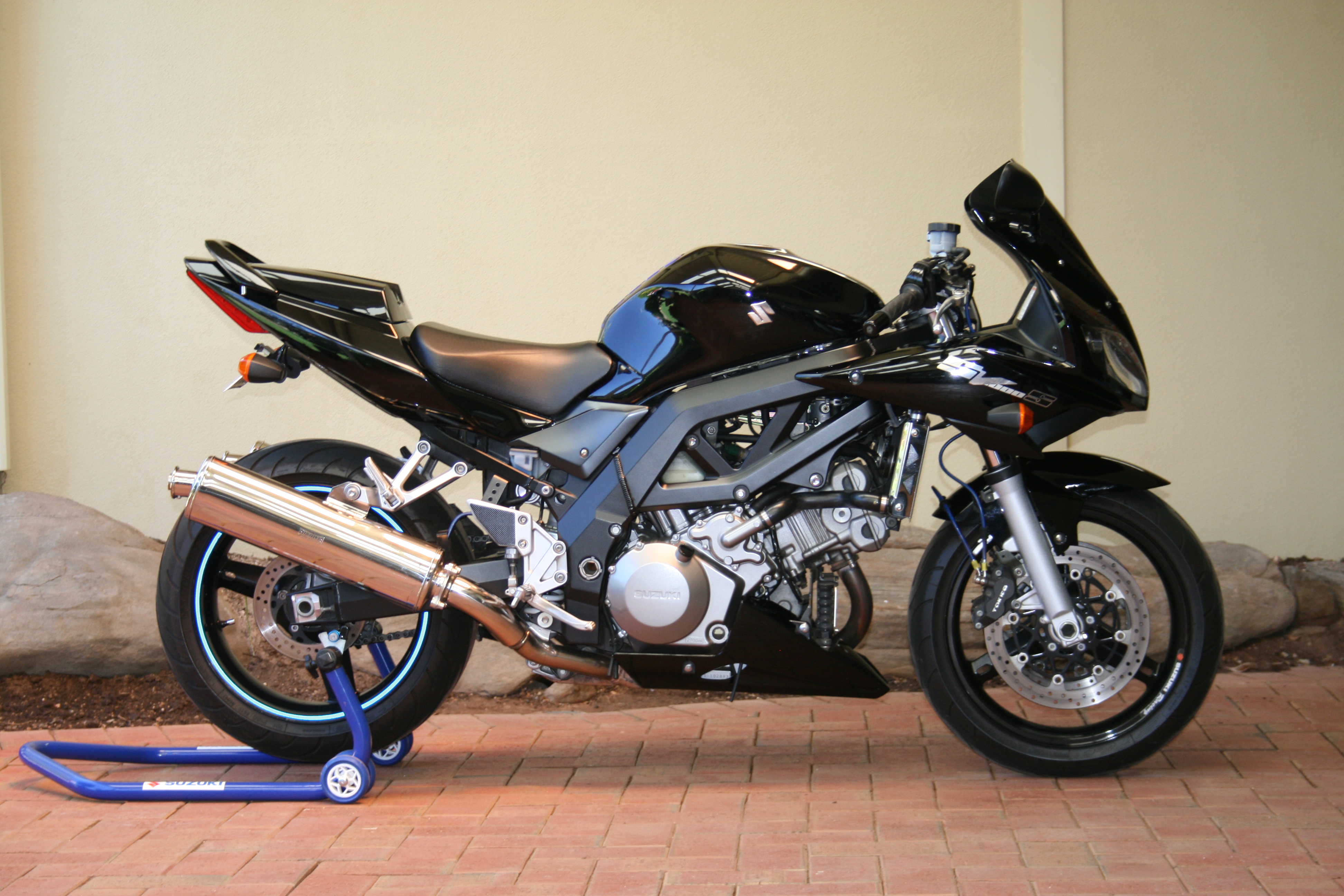
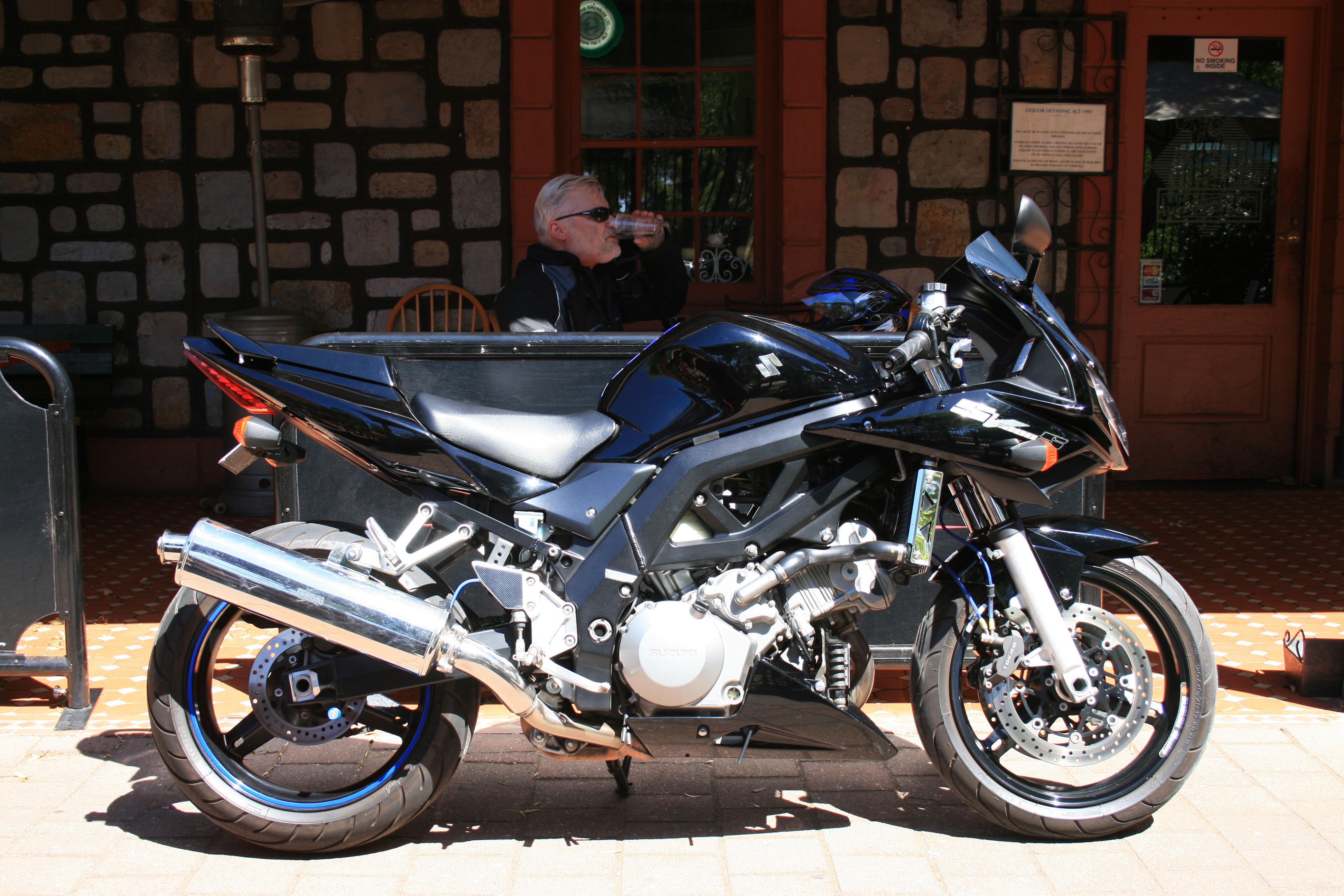
Black lithe and beautiful…

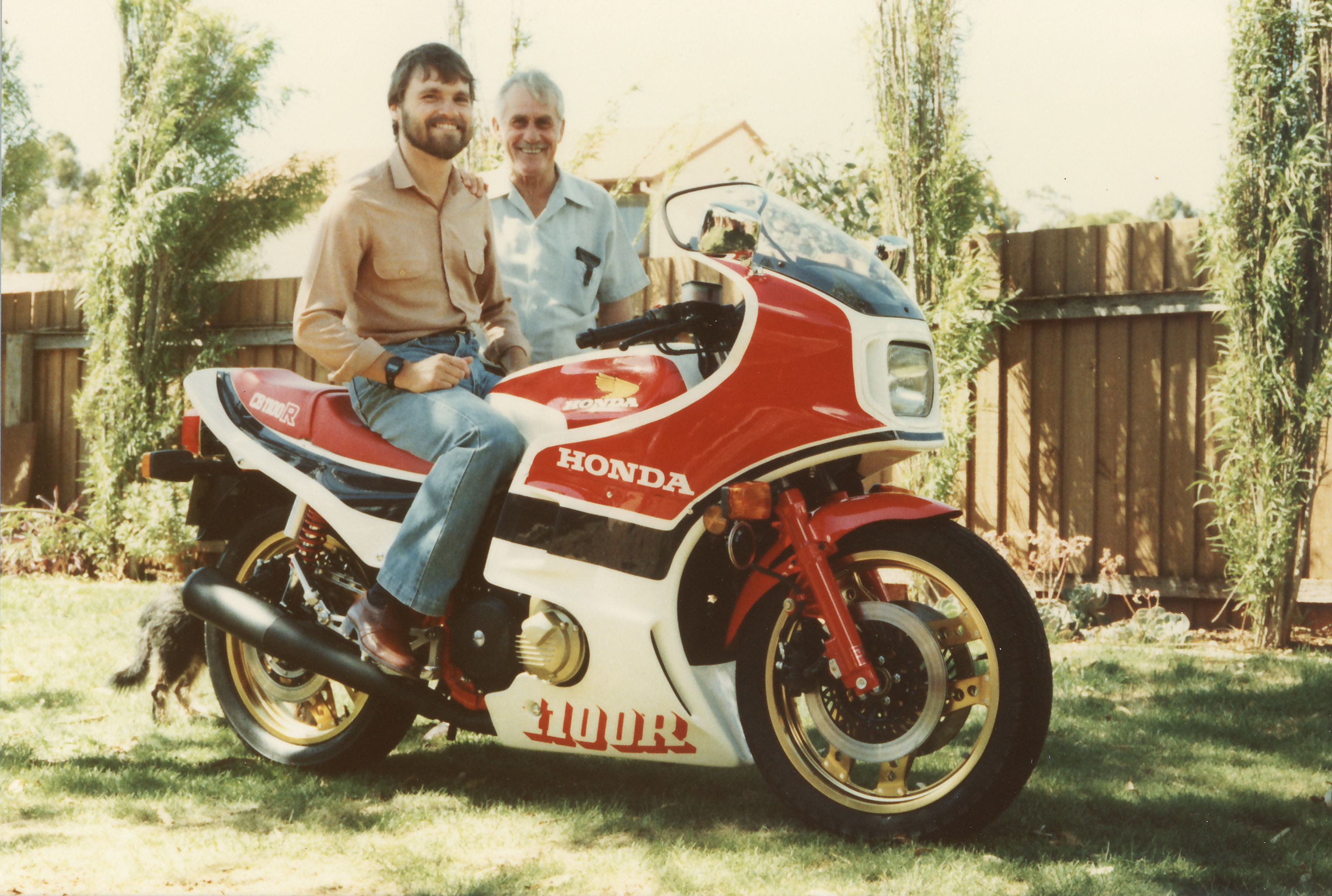
Nine thousand one hundred and twenty-five days had passed since we parted. The affair had lasted almost five years. It had been exciting, all-consuming, and at times even torrid. She had taken me to places I had never been before. My 1982 Honda CB1100RC, my first true love, was exotic, rare, and many sought after her. Maybe it was inevitable that we would part.But I would never forget her.

My first true love.

My first true love.

I sort solace in an arranged union with a Honda CT110, courtesy of Australia Post. It was a relationship that could never fill the void, never satisfy. She was stout and robust, even fun at times, but reliability cannot replace passion, monotony cannot restore desire.

The time had come to find another, and the computer age gave me opportunity. I found her locally, a 2006 Suzuki SV1000s. She was magnificent, black, lithe and beautiful. I nervously arranged a meeting. Then panic struck. Would I be man enough for her? Could I take her to the edge and back again?

I brought her back to my place. A good foundation for any lasting relationship is the slow ritual of “becoming acquainted”. My eyes and hands travelled leisurely over her taking in the small details and nuances that could only become privy to a lover. On that warm balmy night on the patio, she offered me things I had never before experienced…

Mono-shock rear suspension, precision die-cast alloy frame, my god – she has fuel injection and liquid cooling! Her suspension front and rear are fully adjustable – preload, compression and rebound damping. She boasts a hydraulically operated rear torque limiting clutch, steering damper, adjustable brake and clutch lever, magnesium camshaft and ignition covers, hollow cast alloy wheels and L.E.D. tail and instrument lights! What had seemed a long time between loves suddenly felt like an eternity.

When I took her out for that first time, it was as if we had known each other all our lives. Our frames melded together, a perfect fit for my 1.7-metre stature, both feet planted firmly on the ground thanks to her 800mm seat height. I pressed her button and could feel her pulsating 996cc V-twin heart beating heavily beneath me.

she offered me things I had never before experienced...

…she offered me things I had never before experienced…

As we prepared to depart a torrent of thoughts flooded my mind. I had learnt during my internet quest that madness lurked in her blood-line. Her forebear the TL1000s suffered “dissociative identity disorder”, a combination of a more highly strung personality and an innovative but inadequate rotary rear damper. Too much throttle from the light switch like fuel injection system gave a propensity for the TL to wheel stand out of slow corners and shake her head viciously in fast ones. Suzuki retrospectively fitted a steering damper to early models and made it mandatory for those made after that. There were also whispers of cracks appearing in her alloy tube trellis frame.

Like so many with these deep-rooted problems, it brought about a short life expectancy, a brief but tumultuous five years (1997 – 2001). How much of the TL1000s DNA did my SV1000s possess? Was it Oscar Levant that said, “There is a fine line between genius and insanity”?

It was time. I slipped my black beauty into first and slowly pulled away.  Her ‘box was smooth and slick as she jumped forward – so much grunt from so low down! Although her beating heart was of the same lineage as her mad older cousin, Suzuki claimed over 300 detail changes to her V-twin, aimed specifically at improving midrange torque and ride-ability. Yet she still gives 87kw (118bhp) against the TL1000s’ 92kw (125bhp) and 104nm of torque at 7000rpm compared to 105nm at 8000rpm. And she weighs 5kg less.

We were moving together as one now...

We were moving together as one now…

I tried to clear my head of all this nonsense as our pace increased. A slow turn approached. I squeezed her brakes and snicked down through her gears slowing ridiculously short of the bend. My inexperience with a big V-twin did not take into account her pronounced engine braking or the quality of her stoppers. We kissed the apex together as I rolled my right hand back making her rear squat down as she thrust forward. I gripped her with my thighs as my torso lay atop of her holding on tightly. The world rushed by. We were moving together as one now rolling from side to side, scything through the faster turns with aplomb. The sound emitted from her two big lungs through the Staintune slip-ons brought a wondrous crescendo as each gear hit 9000rpm (I know I could have pushed harder, like the mad one, she redlines at 11000rpm). But we had reached the climax of our trip together, slowing gradually for one of the small townships scattered through the Adelaide Hills.

The liaison had been sweet and short, as these days my endurance is not what it once was. But she had handled herself with poise and grace, a true lady. A soft drink and a cigarette gave time to relieve the pressure that had been placed on my wrists and thighs and occasion to take in the perfection of her parts as she waited by the road. The journey home was a relaxing one, keeping her between 4000 and 6500rpm, just riding the torque and enjoying the scenery. Oh and that glorious exhaust note!

a soft drink and a cigarette..

…a soft drink and a cigarette.

There are some that might say she is nothing more than an ageing model. But she has retained her youthful looks and has so much to offer any partner. Why did Suzuki cast out her kind? Was a short-lived life span, (again) of five years (2003 to 2007) due to death by association to the insane TL1000s? Yes, her transplanted heart lives on in her second cousin the V-Strom, but why was one so beautiful given up for a homely farm girl? Ducati has shown what can be achieved with a sports V-twin, yet their early ancestors were hardly easy to live with.

They say a gentleman never compares loves, but my CB1100RC produced 2.21kw (3bhp) less, weighed 47kg more and redlined at 1500rpm below my SV1000s. No matter, if my CB1100RC was my first true love, then my SV1000s is not only the love of my life but my soul mate.

Words Geoff Dawes (C) 2013. Photographs Geoff and Harrison Dawes (C) 2013.
Published in Australian Motorcyclist  August 2013