The Honda CB1100R Series

The fully faired 1982 CB1100RC Honda.

It ‘s an understatement to suggest that racing success helped build the very foundations of the Honda Motor Company.  It was the driving force to win, instilled by corporation founder Soichiro Honda that the company’s engineering capabilities be proven in the white heat of competition. The forays, starting in 1959 to the Isle of Man TT, to take on the best in the world in Grand Prix racing, proved pivotal to the success of the fledgeling motorcycle manufacturer.

But in 1970’s production racing, and in particular the prestigious Australian Castrol Six Hour production race, this philosophy was faltering. In a class of racing that pitted showroom floor models against each other under racing conditions, Honda had tasted success but once, in the 1971 event, with the venerable CB750.

The unfaired CB1100RB explicitly built for the 1980 Australian Castrol Six Hour race.

The Castrol Six-Hour had become the jewel in the crown of endurance production racing that enjoyed live television coverage in Australia and immense media exposure all over the world.  It was a class of racing with a huge following as it allowed motorcycle owners to see how “their” bike performed against machines from the other manufacturers.  And in an era of unprecedented motorcycle sales, the old adage, “what wins on Sunday sells on Monday”, had never been more true.

Honda held great hope for success in 1979 with the RCB endurance racer inspired CB900FZ, but it was unable to be fully competitive against its larger capacity rivals from Suzuki and Yamaha. Although claiming a creditable third place the previous year, Honda’s own CBX1000 six-cylinder flagship did not have the success that Honda desired.

And the war for production racing supremacy was not just being waged in Australia, but also South Africa, New Zealand and the U.K which was also a part of Honda’s dilemma.  This required contemplation and a new approach to the race, or rather, the regulations.

The 1979 CB900FZ

The CB1100R series of motorcycles was created out of production racing necessity.  Honda became the first Japanese manufacturer to build a production homologation special for the road,  manufacturing enough road-registerable models to stay within the rules.

In a clever bit of reverse engineering Honda looked to its CB900FZ road bike, which had been based on the highly successful RCB1000 endurance racer.  It used lessons learnt from the RCB to transform the CB900F into a specialist endurance production racer. There was some irony here as Honda was also developing in parallel the RSC1000, by necessity based on the CB900F, to meet the regulations for the new prototype World Endurance Championship of 1980.

Honda Australia rider Dennis Neil was recruited by Honda Japan to develop the new machine and was responsible for testing it in both Australia and Japan. One hundred of the CB1100RB were fast-tracked and registered by Honda to make the September cut off deadline for entry into the 1980 Castrol Six Hour.  This was an unfaired version of the bike, which was unique to the R series.  European models and those released in most other markets were fitted with a half fairing.

The faired version of the CB1100RB sold in South Africa the UK and New Zealand.

The faired version of the CB1100RB sold in South Africa the UK and New Zealand.

The evolution of the CB900F to transform it into the CB1100R, though, was quite extensive.

Although the engine shared the same 69mm stroke of the CB900F, the bore was increased from 64.5mm to 70mm to give an engine capacity of 1062cc, the same as variants of both the RCB and RSC endurance racers. The cylinder block was solid, doing away with the air gap between the two outer and two inside cylinders. The compression ratio was increased, up from 8.8:1 to 10:1, and many of the engine internals were beefed up, including a wider primary drive chain, strengthened clutch, conrods, big end bearings and gudgeon pins while the pistons became semi-forged items and the camshafts had sportier profiles. The standard gearbox was retained, although final overall gearing was raised by ten percent, and carburation also remained the same as the CB900F using four constant velocity Keihin VB 32mm units. This resulted in CB1100RB producing 115hp (85kw) at 9000rpm and 72ft.lb  (98N-m) of torque at 7,500rpm, compared to 95hp (69.8kw) at 9000rpm and 57ft.lb (77.4N-m) at 8000rpm of the CB900FZ.

The chassis was strengthened with extra gusseting and the detachable lower frame rail of the CB900F, designed for ease of engine removal, now became a solid part of the frame.  The front engine mounts were also heavy-duty alloy items, which no doubt all helped to improve the rigidity of the chassis.  The 35mm CB900F front forks were replaced with new 38mm units that used air assistance to adjust the spring rate via a linked hose from each fork and the rear shock absorbers carried a finned piggyback reservoir to help cool the damping oil.  Honda reverse Comstar wheels were fitted although the diameters remained the same as the CB900F, with an 18inch rear wheel and a 19inch front. But the rim widths were wider, up from 2.15 inches for both the front and rear of CB900F to a 2.75 inch rear and a 2.5 inch front for the CB1100RB. This was to accommodate the new generation tyres developed for the race due to the intense competition between tyre manufacturers. Honda also introduced for the first time their dual twin-piston floating calipers that gripped solid 296mm disks.

A single fibreglass seat unit that also housed the toolkit took the place of the CB900F’s dual seat. The fuel capacity was increased from 20 litres to 26 litres with a massive alloy fuel tank.  The instruments and switchgear were taken straight off the CB900F, but the duralumin handlebars were changed to multi-adjustable items that could be replaced quickly in the event of a crash. The exhaust system was visually similar to the CB900F, being a four into two, but on the CB1100RB it was freer flowing and utilised a balance pipe just ahead of the two mufflers. It was also finished in matt black as opposed to chrome and was well tucked in. The pulse generator and ignition cover on either end of the crankshaft were reduced in size and chamfered to also help improve ground clearance.  The foot pegs were rear-set and raised slightly on new lighter alloy castings. Honda was quite proud of achieving a fifty-degree angle of lean for the RB without anything touching down. This was extremely important at such a tight circuit as Amaroo Park where the Castrol Six Hour was held.

Single seat unit housed the toolkit.

Single seat unit of the RB housed the toolkit.

However, the Willoughby District Motorcycle Club did not welcome the appearance of the CB1100RB at the 1980 Castrol Six Hour.  The organisers of the event argued that the CB100RB did not conform to the rules for a touring motorcycle, as it had no provision to carry a pillion passenger. Honda quite rightly pointed out that this was not written into the supplementary regulations for the event and indeed the organisers had to yield. It should also be pointed out that the organisers had turned a blind eye in previous years to entries such as the 750 and 900 SS Ducati’s that also could not carry a pillion passenger.

It’s history now that Wayne Gardner and Andrew Johnson on the privately entered Mentor Motorcycles CB1100RB won the race, held in wet conditions, ahead of the Honda Australia entry of Dennis Neil and Roger Heyes.  But it was a controversial win and not the clear-cut victory Honda would have hoped for. Suzuki Australia claimed that a lap scoring error had taken the win away from John Pace and Neil Chivas on a GSX1100.  After three appeals the Suzuki team were eventually awarded the win, only for Mentor Motorcycles to appeal against the ruling and be reinstated just four weeks before the 1981 race. To top all this off, the WDMC released the supplementary regulations for the race, which specifically banned solo seats.  Honda turned its back on the 1981 race and once again studied the rules.  Some solace was sought when the CB1100RB won all of the eight 1981 MCN Streetbike series in the UK, with seven victories going to series winner Ron Haslam.

The end result of all of the above culminated in the 1982 CB1100RC, which came equipped with a dual seat and rear footpegs – and also a full fairing. A removable cover was used to give the appearance of a single seat, while the tools were moved to a lockable toolbox that was hung off the seat subframe just behind the left rear shock absorber.  The rear suspension units were now inverted reservoir gas charged FVQ units with four-way compression damping and three-way adjustable extension damping with five spring preloads.  Front fork diameter was increased from 38mm to 39mm with separate air adjustment on the top of each fork leg.  The forks also boasted a new innovation from Honda, Torque Reactive Anti-dive Control or TRAC. This was a mechanical four-way adjustable system that utilised the pivoting torque of the brake calipers to close a valve in the fork leg, under braking, to increase compression damping which limited front end nose-dive.

The front brake disks now became ventilated while 18-inch “boomerang” spoked Comstar wheels graced both ends of the RC.  The rear rim width was now 3.0 inches, up from 2.75 on the RB, while the front rim width remained 2.5 inches but on an 18 instead of 19-inch wheel.  Steering rake was increased by half a degree to 28 degrees and trail was shortened from 121mm to 113mm mainly to accommodate the effects of the new 18-inch front wheel.  The wheelbase also became slightly longer from 1488mm of the RB to 1490mm for the RC but still 25mm shorter than the CB900F.

The instrument “pod” now was now mounted in the nose of the full fairing, and the tachometer became electronic as opposed to the cable driven item of the RB.  There was also the inclusion of an oil temperature gauge mounted with the warning lights on the top steering yoke.  The full fairing was lightweight fibreglass, reinforced with carbon fibre, and its lower half was quickly removable utilising six Dzus type fasteners and two screws.  In the engine department, the only significant mechanical change was a stronger cam chain tensioner and 1mm larger Keihin VB 33mm CV carburettors. Claimed horsepower and torque remained the same as the CB1100RB, although South African and New Zealand models were recorded as giving 120hp.

Honda dominated the 1982 Castrol Six Hour even though Suzuki unleashed its 1100 Katana with special wider wire wheels.  Wayne Gardner and Wayne Clarke took the top place on the podium with three other CB1100RC’s finishing behind them.  The nearest Suzuki Katana was a lap down in fifth. Honda again dominated the British MCN Streetbike series winning all the races with Ron Haslam and Wayne Gardner sharing the spoils and series title. For 1983 new restrictions were put in place for production racing, which limited engine capacity to 1000cc and effectively made the CB1100RC redundant.
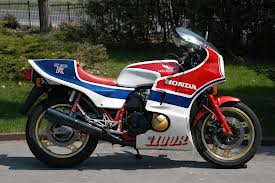
The Honda CB1100RD. Note the nose of the fairing in line with front axle line.

The Honda CB1100RD. Note the nose of the fairing in line with front axle line.

Honda still produced one more model in the series, the 1983 CB1100RD, the main differences from the RC being a rectangular tube swingarm, which was slightly wider for the new fatter tyres, and it also carried upgraded rear shock absorbers. The nose of the fairing was also pulled back to be in line with the front axle to meet racing regulations.  Aesthetically the blue stripe ran up the sides of the headlight and not underneath it while the blue and red paintwork appeared almost metallic in its finish. The Honda winged transfer on the tank was grey, black and white as opposed to yellow and white of the RB and RC.

The overall finish of the RD appeared a notch above the RB and RC, and it was suggested that Honda did not have the capacity on its production line to cope with the limited number run required to homologate these two models.  Honda’s Racing Services Centre (which became the Honda Racing Corporation in 1982) was said to have been responsible for assembling both the RB and RC.  An upgraded production line in 1983 enabled Honda to accommodate the RD.  This does make sense and a good reason for the better quality of finish of the RD. It also makes the RB and RC somewhat unique as they would have been assembled by Honda’s racing department.

How limited in numbers was the CB1100R series?  1,050 of the 1981 RB were reported to have been built, although whether this figure includes the 100 fast -racked unfaired machines for the 1980 Castrol Six Hour is unclear.  It seems that 1,500 of both the RC and RD were made, giving a number of 4,050 in total.

Words Geoff Dawes © 2013. Photographs Geoff Dawes (C)1982. Images http://www.nirvanamotorcycles.com, http://www.mctrader.com.au, http://www.worldhonda.com, http://www.carandclassic.co.uk, http://www.flkr.com.

Speed King

For enthusiasts of Land Speed Record breaking, the title “Speed Ace” or “Speed King” conjures images of such archetypal heroes as Segrave, Campbell and Cobb, frantically sawing at the wheel of some aero-engined behemoth as it thunders down the beaches of Daytona or along the dazzling white salt flats of Bonneville. English gentlemen who would risk life or limb for King and Country and the prestige of Britain.

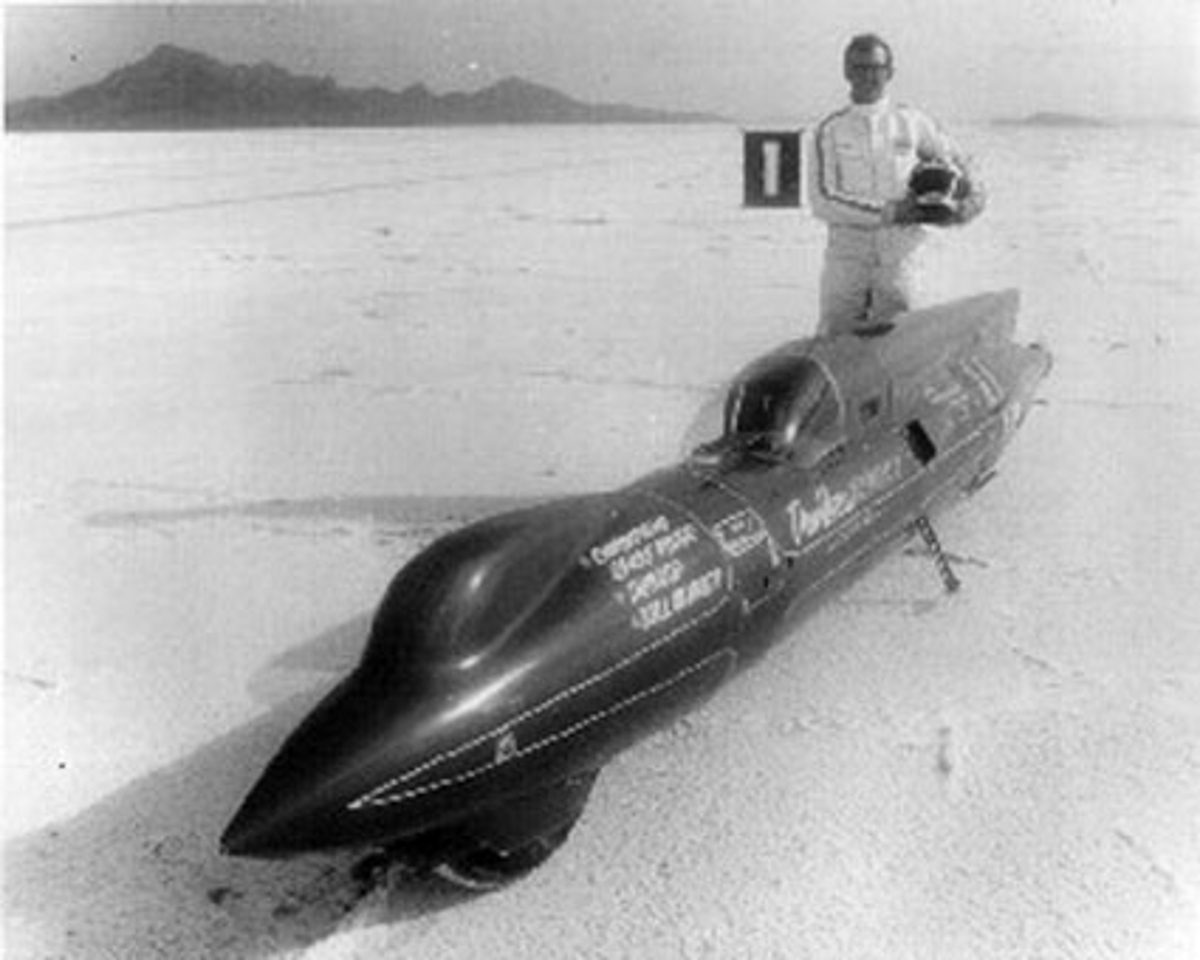
But record-breaking often creates less likely heroes who would arguably qualify for the same distinguished mantle.  Don Vesco was one such person, who not only set an outright World Land Speed Record for motorcycles of 318.598mph (512.73kph), but also an outright World Land Speed Record for a wheel-driven vehicle of 458.440mph (737.787kph).

Don Vesco.

Don Vesco.Record-breaking was only one part of a lifetime chasing speed.

Record-breaking for Vesco though was only one part of a lifetime chasing speed.

Don was born in Loma Linda Southern California on April the 8th 1939, in an environment that not surprisingly nurtured a “need for speed”.  His father, John Vesco, ran hot-rods and streamliners out of his body shop on Southern California’s numerous dry lakebeds – a perfect setting for Don and his two younger brothers Rick and Chuck to gain an education in all things fast.

Vesco was mechanically gifted as a child, and while still in his teens, modified a rigid framed Triumph 500cc T100R twin to enter his first official race, a local drag race meet at San Diego’s Paradise Mesa drag strip. What followed was that unique blend of American motorcycle racing, on bitumen, dirt track and TT steeplechase. One of Don’s old Hoover High School buddies and main rival on the track in those days was a future legend, Cal Rayborn.

It was in the discipline of road racing that Vesco excelled and it soon became apparent that the Triumph was no match for the Manx Norton’s many of his rivals were racing.  Thanks to a loan from his girlfriend Norma, who would become the first of his three wives, Don was able to purchase a Manx.  The combination proved almost unbeatable in local road races at tracks like Willow Springs and Riverside in the late 1950’s and early 1960’s – at a time when Japanese manufacturer Honda was trying to take a foothold in the lucrative American motorcycle market.

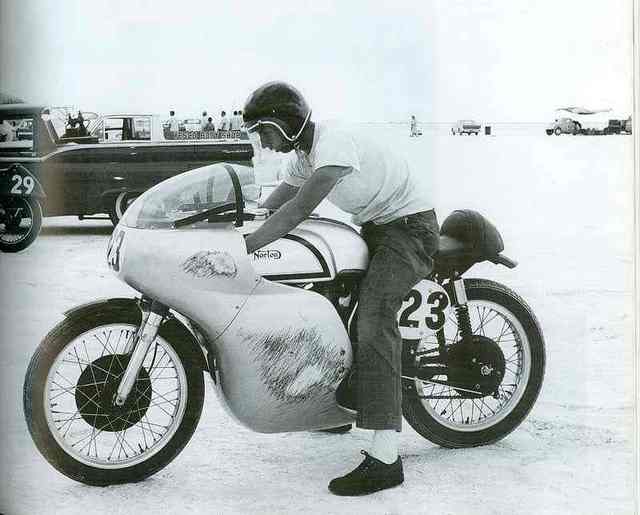
Don on the salt at Bonneville with his Manx Norton.

Don on the salt at Bonneville with his Manx Norton.

Honda hired Vesco to race its highly successful RC161 four-cylinder four-stroke 250cc Grand Prix racer in American events to help promote the brand. Don duly notched up two wins on the RC161 first time up at the Goleta Airport track in Santa Barbara but crashed the bike several months later at the same venue.  When a promised ride in the 1962 US Grand Prix at Daytona (an FIM sanctioned international event) was given to Japanese rider Kunimitsu Takahashi, it appeared that Don was out of favour.

In a twist of fate another Japanese manufacturer, Yamaha was also trying to promote their motorcycles in America. Yamaha contacted Vesco to race its RD56 250cc two-stroke Grand Prix racer the following year in the open class at the same event. The race, however, wasn’t to be all smooth sailing. Vesco, suffered a fall in the Daytona infield, but remounted and went on to lap the entire field to win the 1963 US Grand Prix, giving the Japanese manufacturer their first major victory in America. Vesco was to ride again for Yamaha at Daytona in 1964, and this time the Grand Prix was a fully sanctioned round of the FIM 250cc World Championship.  Unfortunately, a nasty fall in practice resulted in a broken collarbone for Vesco, and the GP racer was handed to up and coming English rider, and future World  Champion, Phil Read. The bad luck continued for Yamaha and the bike seized during the race.

Don aboard the Open Class winning Yamaha RD56 at Daytona 1963 with Japanese rider Fumio Ito.

Yamaha was now offering Don a dealership, which initially he declined, but reconsidered when his employer complained he had too much time off through racing accidents. He opened shop in El Cajon California in 1966.

By the early 70’s Vesco had two of the world’s best racers riding out of his dealership, former world 250cc Grand Prix champion, Australian Kel Carruthers (who had come to live and race in the U.S. at Don’s invitation), and his old racing buddy and rival Cal Rayborn.   By the late 70’s other such greats as Gene Romero, Dave Aldana, Ron Pierce and Yvon du Hamel had all ridden under the Team Vesco Yamaha banner.

Don had by now shelved his own racing ambitions to concentrate on the dealership with the satisfaction of having been a factory rider for a number of manufacturers including Honda, Yamaha, Bridgestone and BSA.

Don on the cover of the Orange County Raceway program riding a 250cc Bridgestone GP racer.

It was during this period that Vesco began his highly successful motorcycle land speed record runs at Bonneville Salt Flats. Don was no stranger to the salt having first run a motorcycle at Bonneville at the age of 16, and in 1963 joined the exclusive 200mph (321.87kph) club, driving his fathers Offenhauser powered four-wheeled streamliner #444 to 221mph (355.67kph).

However, it was the outright Motorcycle Land Speed records that Vesco became synonymous with. The first was in September 1970 using a twin-engine streamliner fitted with Yamaha R3 air-cooled 350cc two-stroke engines to set a new world record of 251.924mph (405.43kph), becoming the first man to break the 250mph barrier.  It was short lived though, as less than a month later Harley-Davidson broke his record with Cal Rayborn at the controls. Vesco knew of his friend’s record attempt and made sure he received his contingency money from Yamaha and his other sponsors quick smart!

Vesco and Big Red the first motorcycle to achieve over 250mph.

Vesco and Big Red the first motorcycle to achieve over 250mph.

Five years later Don returned to the salt and was the first to crack the 300mph barrier and set a new record in the Silver Bird Yamaha, (a stretched version of his old streamliner Big Red, fitted initially with two TZ700cc two-stroke Yamaha racing engines), leaving the mark at 302.928mph (487.53kph).

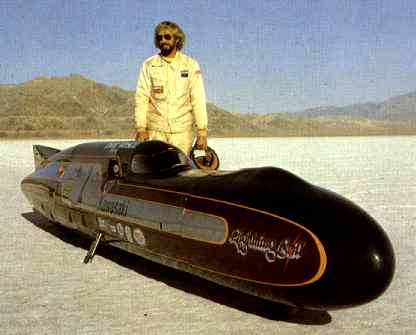
This was not enough for Vesco, and in August 1978 he established a new outright world record of 318.598mph (512.73kph) with Lightning Bolt using two modified 1015cc turbocharged Kawasaki KZ900 engines.  Remarkably this outright world record stood for 12 years.

But it was only two months later that success turned to failure when Don took Lightning Bolt to El Mirage dry lake and crashed.  Vesco escaped without injury, but much of the streamliner’s bodywork was damaged.  By 1980 Don had finished work on a new streamliner using two turbocharged 1300c six cylinder Kawasaki engines, although success eluded his latest creation.

Don with the Silver Bird Yamaha streamliner after setting an new world record of 302.98mph.

Don with the Silver Bird Yamaha streamliner after setting a new world record of 302.98mph.

Vesco now started to eye the record for wheel-driven automobiles and in 1982 returned to Bonneville with a unique machine called Sky Tracker. Built along the lines of Don’s motorcycle streamliners, Sky Tracker used the driver’s compartment from Lightning Bolt and sported five wheels, two next to each other at the rear, one on each side and enclosed in the middle of the bodywork, and one at the front.

Rain, in both 1982 and 1983, thwarted attempts with Sky Tracker at Bonneville, although a speed of 235mph (378kph) was achieved in 1984 using a turbocharged Drake-Offenhauser engine before the meet was rained out again.  1985 saw Vesco qualify Sky Tracker for the World Finals record runs with a pass of 318mph, (512kph) his unusual creation starting to show its potential. Like anybody involved in the pursuit of speed, Vesco was well aware of the dangers, but a blown rear tyre at 350mph (563kph) underlined that point in no small way.  Sky Tracker crashed end over end five times utterly destroying the car. Don came away with damaged vertebrae, concussion and a broken bone in his hand and right foot.

Don with the Kawasaki Lightning Bolt. His record stood for 12 years.

Don Vesco with the Kawasaki Lightning Bolt. His record stood for 12 years.

Finding enough money to continue chasing the record was not unfamiliar territory for Don and his brother Rick who was also working on a parallel project. It made sense to join forces to complete a new twin-engine car, although it was not until 1991 with a pair of turbocharged 160 cubic inch Drake-Offenhauser power units that it started to show promise with a run of 372mph (598kph).   Expensive engine failures were now becoming a problem, and it was apparent to the brothers that piston engine power was reaching its upper limits. A different power source was needed if they were to break Al Teague’s wheel-driven record of 409.97mph (659.78kph).

A gas turbine was seen as the best solution, and a compact helicopter unit could be found comparatively cheaply in the form of an Avco Lycoming T55-L-11A SA. The streamliner now became known as the Turbinator with its engine producing 3,750hp at 16,000rpm, driving all four wheels through a gearbox bolted to the front with a reduction ratio on the shaft of 2:1.

Turbinator.

Turbinator.

The first development runs took place in 1996 at Bonneville, and over the next four years, Don and Team Vesco set three national records at the World Finals in excess of 400mph (643.74kph), culminating a one-way run of 427mph (687.19kph) in 2000. The world record slipped through their grasp that day when a gearbox failure with Turbinator prevented the team turning the car around for the return run within the one hour stipulated by FIA regulations.

Team Vesco returned to Bonneville once again in 2001 for the World Finals, with 500mph squarely in their sights.  The team were buoyed by the fact that in a one-way “shakedown” run Turbinator reached 470.28mph (756.84kph) and was still accelerating out of the measured mile. The record runs however produced a real problem.  Don was unable to hold open the throttle as the engine temperature at the burners kept creeping up dramatically and could have caused the engine to self-destruct. Vesco had to modulate the throttle 16 times to contain the temperature but still hit over 458.mph (737.08kph) on the first run. The problem was the reduction gearbox, bolted to the shaft on the front of the engine, prevented enough cooling air to flow into the turbine.

The return run was going to be challenging, and again Vesco was required to modulate the throttle 18 times to contain engine temperature. Worse was yet to come as the rear left tyre blew inside the measured mile. It took all of Don’s skill and experience to keep the Turbinator on track and slow it down, stopping a mere 15 feet inside the black line.

Team Vesco had done the job; the return run had equalled the first to give a two-way average of 458.44mph (737.79kph).

Don and the team were happy to have beaten Al Teague’s 1991 wheel driven record of 409.986mph (659.81kph) in Spirit of ‘76. But more delighted to have broken the record for a gas turbine automobile of 403.10mph (648.73kph) set 37 years earlier in 1964 by Donald Campbell at Lake Eyre in South Australia driving CN7 Bluebird.

Don and Team Vesco break the wheel-driven Land Speed Record 2001.

Don and Team Vesco break the wheel-driven Land Speed Record 2001.

In 1999 the American Motorcyclist Association had honoured Vesco’s achievements and inducted him into their Hall of Fame. Don turned 60 that year.  If there is one thing, that old motorcycle racers know from experience, crashing and riding injured come with the territory. Vesco had suffered his share, but in 1995 while spectating at a sprint car meeting at the Manzanita Speedway in Phoenix Arizona, Don was struck in the left eye and permanently blinded by a piece of debris thrown up by the rear tyre of a sprint car. Driving Turbinator with one eye was just another obstacle for Don to overcome, which makes those 400mph (643.74kph)  plus runs all that more remarkable. It didn’t deter Vesco from competing at Daytona in the BMW legends series, riding an R1100RS as fast as ever, and he continued to compete in AHRMA events on one of Team Obsolete’s Manx Nortons.

Unfortunately, there was one final obstacle Don was unable to overcome before he could achieve his dream of 500mph (804.67kph). He was diagnosed with prostate cancer and succumbed to the illness on the 16th of December 2002 aged 63.  Vesco was inducted posthumously into the Motorsports Hall of Fame of America in 2004.  Today, after 13 years, Don’s record still stands, but Team Vesco will continue to work towards that dream of 500mph (804.67kph) and will be back at Bonneville with an upgraded and improved Turbinator 11.

Don Vesco, factory motorcycle racer, team owner, engine tuner, designer, Land Speed Record Breaker. Speed King.

Words Geoff Dawes (C) 2013. Images http://www.bluebird-electric.com, http://www.bikernet.com, http://www.gregwapling.com, http://www.forumboxerworks.com, http://www.yamahapart.com, http://www.eliteday.com, http://www.global.yamaha-motor.com and http://www.croinfo.net.

Heli Bars

Comfort without compromise.

Funny word “average”.  It can be seen in some applications as almost derogatory or just plain insulting if it’s used with the right inflexion.

But it’s a word motorcycle manufacturers have to live with on a daily basis, although not in the context of the quality of the product they produce.  It’s what they have to take into account when deciding on the ergonomics of a given motorcycle, as the human body comes in such a diverse range of shapes and sizes. Ultimately these decisions are usually a compromise based on the dimensions of the “average” human.

Enter American accessory handlebar manufacturer Heli Bars. With a slogan like “comfort without compromise,” they engender hope to those of us perhaps at the wrong end of the “average” spectrum.

I purchased a pair for my Suzuki SV1000s from the local importer, Mick Hone motorcycles, via their website ( www.mickhone.com.au) for the reasonable sum of $350.00c including express postage.

Fitting them was a straightforward procedure using the company’s instructions, although to retain the manufacturer’s warranty fitting by a qualified mechanic is required.  The only special tool needed was a torque wrench for the head stem nut and handlebar pinch bolts.  Most of the bars Heli make utilise the stock brake, clutch and throttle lines, which was the case with my SV1000s.

The end result lifted the bars by just over 5cm and reduced the “reach” by a maximum of 2.54cm. This doesn’t seem like much but the difference is quite noticeable with less pressure on the wrists and lower back and even modulating the throttle seems a little easier.  I didn’t weigh the stock handlebars, but the Heli Bars are heavier and appear to dampen engine vibration better. If there is a down side, I did notice a slight loss of “feel” from the front wheel, but the benefits of the Heli Bars far outweigh my sensitivity in adjusting to them.

Heli Bars.

Heli Bars.

Original handlebars.

Original handlebars.

Long rides without the discomfort of the stock bars, in my opinion, make them a worthwhile investment.  Heli makes a range of replacement handlebars for most popular motorcycles from a wide variety of manufacturers.

Words and photographs Geoff Dawes. (C)2013

Casey Stoner Pushing The Limits

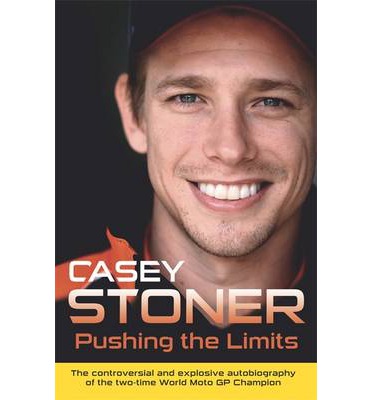
For a large number of MotoGP followers, and in particular fans of Casey Stoner, his new autobiography (with Matthew Roberts), “Casey Stoner Pushing The Limits” subtitled ‘The controversial and explosive autobiography of a two-time World Moto GP Champion” holds very few surprises. Many of the events in Stoner’s career and early life have already been well documented in the media.9781409129219

But the book draws all the elements of Casey’s life together in a single volume that gives him the freedom to set the record straight after years muted media statements often due to the politics and pressure of the MotoGP paddock.  Stoner does not like being in the public spotlight and has found it difficult to fit the “Superstar” persona that the commercialised sports owners, Dorna, and the ensuing and often frenzied media pack try to demand.

Casey’s early life and his  love of motorcycles and racing is intriguing, and it’s clear that his upbringing played such an important part in shaping his career

However, the greatest revelation, I personally found, was his reasons for leaving Australia to compete overseas.  Although forced upon him, it was this decision that set Casey and his parents on the long and hard road to success.

“Casey Stoner Pushing The Limits” is well worth reading if you have little or no knowledge of this great Champions career. For those who follow the sport, or are a Stoner fan, it will clear the muddied waters of MotoGP politics, revealing how incredibly special the talent of Casey Stoner is.

Highly recommended.  Available from the Book Depository in hardback or paperback.

Words Geoff Dawes (C) 2013.

The Changing Of An Era For MotoGP ?

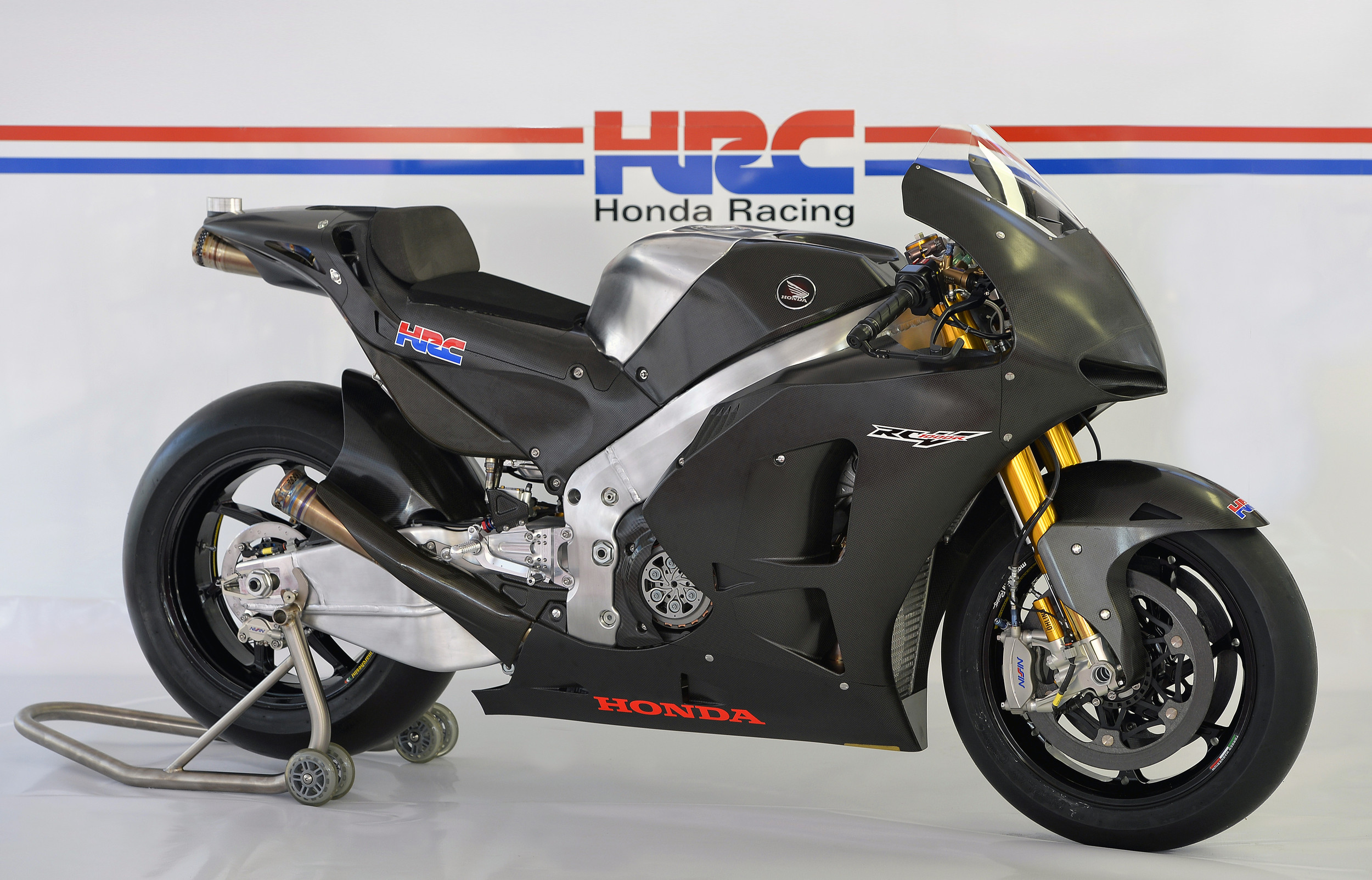
Honda’s new “Open Class” production racer the RCV1000R.

The final MotoGP of the 2013 season at Valencia brought with it a remarkable conclusion to the championship, with Marc Marquez clinching the title to become the youngest ever MotoGP World Champion and the first “rookie” to do so in 35years.

There were, however, a number of other events surrounding the race that also announced the changing of an era.

Honda unveiled its RCV1000R “Open Class” racer (formerly CRT), and it is the first production racer to be sold to private teams by Honda since the NSR 500V two-stroke V-twin in 2001.  That in itself is a boost for the category, but when HRC revealed that Casey Stoner tested both bikes at Motegi on the same day, on the same tyres, and the difference between the production racer and full factory RC213V was only 0.3s,  it shone a spotlight onto what may be the future of MotoGP. More significant though, was the time set on the softer compound rear tyre only available to the ‘open’ class riders, dropping the gap down to just 0.17s!

Hiroshi Aoyama on the RCV1000R at the Valencia tests.

The production racer is a “toned down” version of the full factory RC213V. The main differences being steel sprung rather than pneumatically operated valves, and a conventional rather than seamless shift gearbox. The 1000cc 90 degree V4 engine will still produce ‘over 175KW’ (235hp) at 16,000rpm with Öhlins suspension and Nissin brakes fitted as standard.

The price tag to buy the Honda is believed to be around 1.2million euros. However, an upgrade package for 2015 means that the cost, when spread over two seasons, is likely to be approximately 800,000 euros a year, which is more in keeping with Dorna’s policy on pricing for the newly named category.

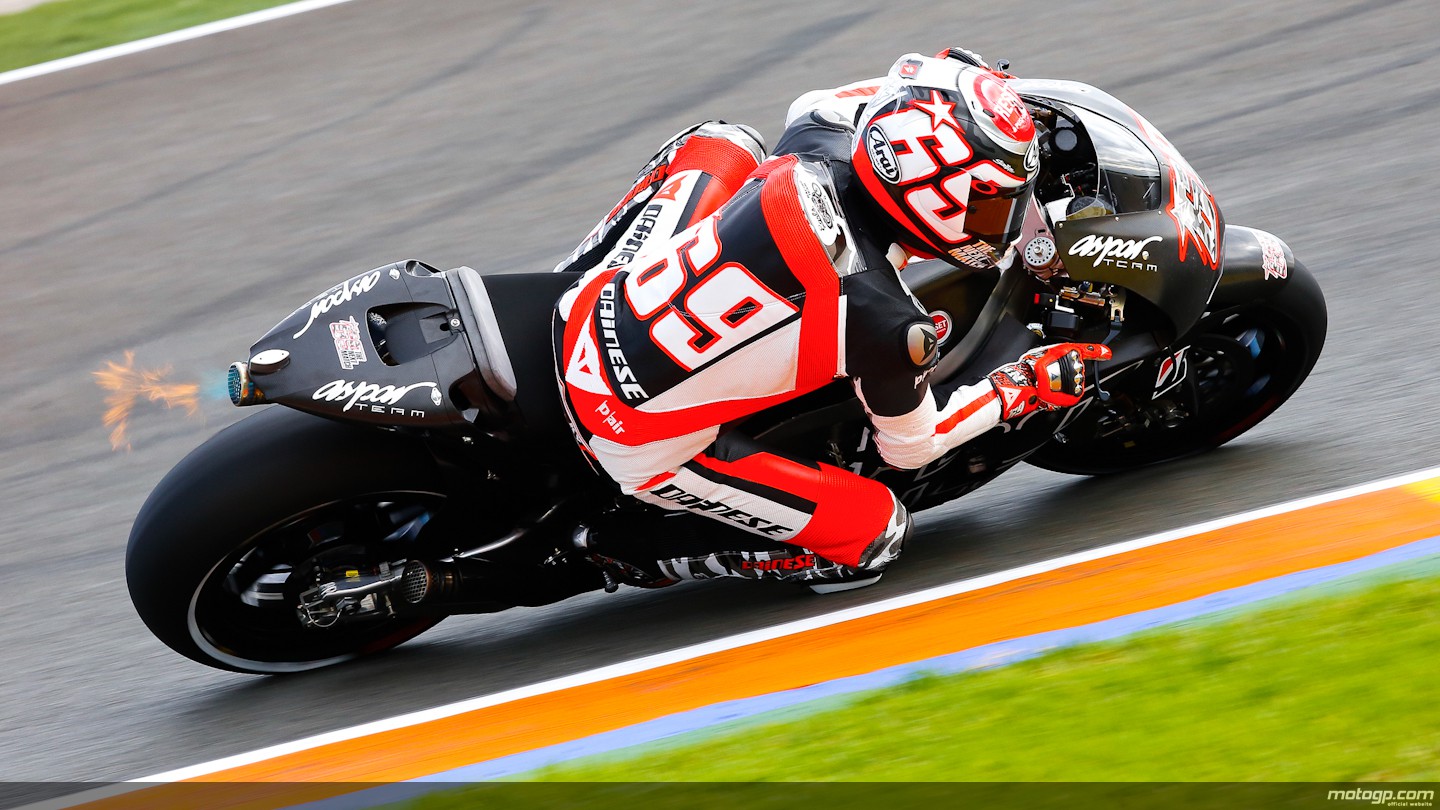
Four machines so far have been purchased; two earmarked for the Aspar Team to be ridden by 2006 World Champion Nicky Hayden and Hiroshi Aoyama. MotoGP rookie Scott Redding at the Gresini Team and Karel Abraham of the Cardion AB Team will ride the other two machines.

Nicly Hayden on the RCV1000R production racer in testing at Velencia.

Nicky Hayden on the RCV1000R production racer testing at Valencia.

Yamaha will also supply “Open Class” machinery to the NGM Forward Racing Team for both Colin Edwards and Aleix Espargaro.  This is the first time since the early 1990’s that Yamaha has offered competitive machinery for sale to private teams in MotoGP.  At that time Yamaha supplied complete engines and technical information to specialist chassis manufacturers Harris and ROC.  For the new “Open Class” Yamaha is supplying the MI engine, frame and swingarm.

Not to be left out, Ducati will also supply a complete “Open Class “ machine to the Pramac Ducati Team.

Aleix Espargro on the Yamaha production racer at the Valencia test.

Aleix Espargro on the Yamaha production racer at the Valencia test.

All of these production racers will have the benefit of 12 engines per season as opposed to 5 for the full factory prototypes and four litres more fuel, 24 compared to 20 for 2014, and there is also a greater choice of tyres for the riders as well.  All of these machines will use the officially supplied MotoGP ECU and software.

The other major event at Valencia was the “sacking” by Valentino Rossi of long-serving Crew Chief Jeremy Burgess.  The announcement was made at a press conference held on the Thursday before the Valencia MotoGP at the Circuit Ricardo Tormo.

Valentino Rossi' Crew Chief, Jeremy Burgess, talks about their parting of ways.

Valentino Rossi’ Crew Chief, Jeremy Burgess, talks about their parting of ways.

“It was my decision because we had already spoken with the team about next year,” explained Rossi. “Jeremy said that he wanted to stay. [But] Jeremy had some question marks for the future [beyond 2014], and he didn’t say ‘yes’ or ‘no’, just that he wanted to wait for next year [to decide].

“I also want to wait until next year, and I will decide after the first races if I want to continue. So it was more my decision and yesterday we spoke together to explain that I needed to make a change and try something different. It’s a new boost to get more motivation, so we decided to do this.

“The level now has raised a lot with the top three riders, and they are able to ride these bikes very fast and the lap time has improved a lot. It’s a great challenge for me and for us, and we know that it is difficult, but I don’t have any regrets or problems with how the team has worked and especially with Jeremy.

I know that this is a key moment because I have in mind that I want to try one time in another way and that this is the moment for that.”

After Rossi had given his reasons for the parting of ways the 60-year-old Burgess commented, “It blindsided me, and I didn’t expect it whatsoever,” he said. “I knew yesterday afternoon when Valentino invited me into his trailer that we weren’t going in there for the Christmas bonus!”

“I haven’t made any plans for the future at this stage. My intention originally was to continue next year and depending on results and desire I would make a call. We’ve been chasing rainbows for four years and haven’t nailed anything decent, and these are long periods in racing, and it becomes more difficult [to win].

“I’ve read many sports biographies, and quite often the top sportsman in the latter part of his career will have a change of caddy or a change of coach, and this is what we’re working on. We worked on fixing the problem for four years, and this is part of that fix, and this is the next step to try and get Valentino back on top.

“Obviously I’m disappointed, but I understand that some change was necessary and only history will determine the outcome of this adjustment. It’s an adjustment to improve the package for Valentino and if this does it then it’s been a success.”

Burgess added: “I prefer how this happened and think that it was a far better way to do it rather than showing up on Sunday night and just saying ‘Ciao it’s all over’.”

During their 14 seasons together Rossi and Burgess have won a record 80 Grand Prix races, using 500cc Honda, 990cc Honda, 990cc Yamaha, 800cc Yamaha and 1000cc Yamaha machinery. As a Crew Chief Burgess has won 13 MotoGP World Championships, 1 with Wayne Gardner, 5 with Mick Doohan, and 7 with Valentino Rossi since starting his career as a mechanic in the 500cc Grand Prix class with Heron Suzuki in 1980.

Indeed the end of an era.

Words Geoff Dawes (C) 2013. Photographs courtesy of Repsol Honda and MotoGp.com

Archives: The Unknown Grand Prix Hero

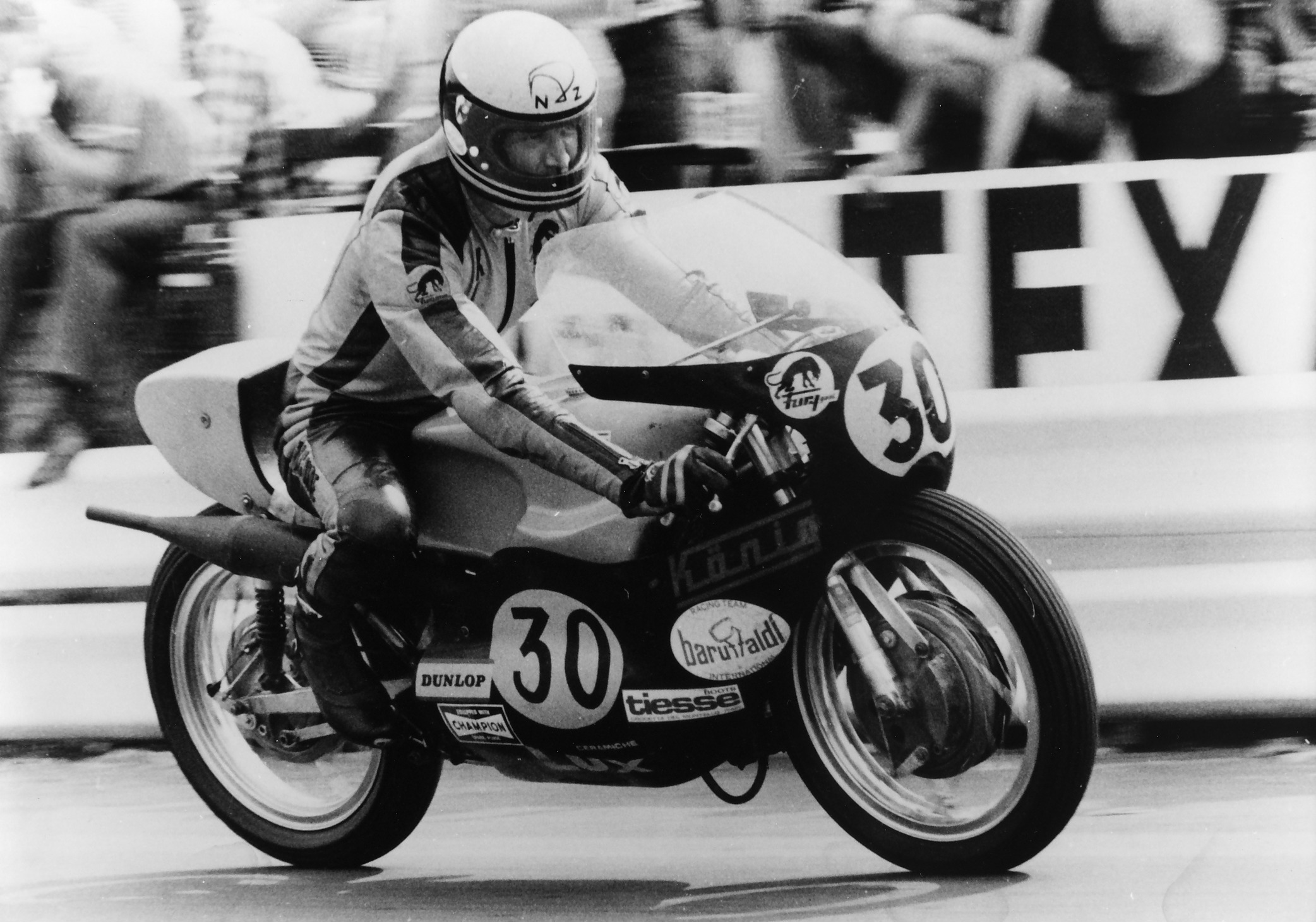
Newcombe in full flight at the Dutch T.T. at Assen.

Before the start of the 1973 500cc Grand Prix season, the all-conquering MV Agusta team held a crushing stranglehold on the premier class.  The monopoly had lasted for 17 years, winning the championship 16 times, the last seven in the hands of the great Giacomo Agostini.  Even the might of the Honda factory with the talents of Mike Hailwood had failed to take the title away.

In 1973 it was Yamaha who decided to take up the challenge and try to become the first Japanese factory to win the blue riband class.  Yamaha’s line up was a formidable one utilising the talents of their 250cc world champion, rising Finnish star Jarno Saarinen, aboard the factory’s latest weapon; an across the frame 500cc four-cylinder two-stroke.  His team-mate was respected Japanese test rider, Hideo Kanaya.

The Italians though, proved they were not about to rest on their laurels by hurriedly building a new four-stroke 500 based on their compact 350 four.  Three times 250cc World Champion, Englishman Phil Read, was drafted into the team to ride it alongside Ago on his tried and proven triple.

But incredibly it became an unknown New Zealander, riding a home built special with an engine from a marine outboard motor, that was to be MV Agusta’s greatest threat.

Kim Newcombe was born in Nelson on New Zealand’s South Island but was brought up in Auckland where he served an apprenticeship as a motorcycle mechanic.

Like many great riders of the modern Grand Prix era, Kim’s early racing career was on dirt tracks. His passion, in particular, was motorcycle scrambling (Motocross)), even riding his Greeves scrambler to meetings when a lift wasn’t available.

Phil Read leads Newcombe at the 1973 Czehoslavakian G.P.

Phil Read leads Newcombe at the 1973 Czechoslovakian Grand Prix.

In May 1962 he was rewarded with a second place in the New Zealand Scramble Championship, which he followed up later that year with another second place in the North Island 250cc Championship.  After such encouraging results, Kim and his wife Janeen decided to sell the Greeves and move to Australia in 1963 for what would become a five-year stay.

Newcombe initially spent time in Brisbane where he raced in both scrambles and Speedway.  Kim and Janeen then moved to Melbourne, and after putting in some good rides on a home-built special (an outdated Greeves with a BSA gearbox), he received sponsorship from Bob Beanam of Modak Motorcycles in the form of a 400cc Maico.  Beanam also sponsored another rider by the name of Rod Tingate, and it was this pair that debuted the first Maico moto-cross bikes in Australia.

However, Newcombe first came across the remarkable German Konig outboard motor while he was working for Bob Jackson Marine in Melbourne.  The Konig proved to be almost unbeatable in its class of hydroplane racing, and in 1965 Kim won two Victorian Outboard Championships using the impressive two-stroke engine. In effect, it was these two West German products that would have such a profound influence on Newcombe’s future.

Kim and the Konig leads Read on the MV Agusta at the Swedish Grand Prix in 1973.

Kim and the Konig lead Read on the MV Agusta at the Swedish Grand Prix in 1973.

Having succumbed to the lure of racing Motocross in Europe, Kim arranged a job as a mechanic with Maico’s experimental department in Germany.  But the position was not available until March 1969, and as Newcombe and his wife were to arrive in Europe some eight months earlier something else had to be found. A phone call to Dieter Konig in Berlin secured Kim a job in the Konig factories experimental department, and it was here that the idea of putting the 500cc flat-four two-stroke engine into a motorcycle racing chassis jelled.

Kim found that Dieter Konig was convinced his two-stroke engines could be as successful in Grand Prix motorcycle racing as they were in hydroplane racing and Newcombe was given the resources and encouraged to develop a Grand Prix racer. But it was a German rider named Wolf Braun who had initially shown an interest in racing a Konig, fitting the outboard motor, mated to a Norton gearbox and clutch, in a modified BSA chassis and then giving the hybrid machine it’s first race.  But minor injuries and a lack of funds prevented Braun from continuing development of the Konig and the complete bike was left at the factory.

Although Kim was keen to prove his ideas about making the Konig into a competitive Grand Prix racer he had not really considered racing it himself. But towards the end of 1969, Kim decided to race the Konig. In September, after obtaining a West German national racing licence, Newcombe entered his first road race at the Avus autobahn circuit near Berlin and won! The following season saw an entirely new chassis – and Aussie Grand Prix rider John Dodds on the bike.

Again it was relatively short-lived; as a privateer, Dodds could not afford to help develop and race an entirely new machine. Newcombe would again have to ride the Konig himself.

Kim on the Kn ig at the Dutch T.T. at Assen 1973.

Kim on the Konig at the Dutch T.T. at Assen 1973.

Kim had qualified for an international racing licence for the 1972 season after winning five junior races the previous year.  His first international race was at Mettet in Belgium, but it was his performance in the selected Grands Prix which followed that showed Kim and the Konig’s real potential, their best results coming from two third places at the East and West German Grand Prix.  The mongrel motorcycle was proving very competitive, with enough power to pass Pagani’s MV on the straights.

Before the ’73 Grand Prix season had started Kim suffered several broken vertebrae in his neck due to a race crash at Hengelo in Holland.  This called for a trip to London to see a Harley Street specialist and Newcombe used the opportunity to attend the annual motorcycle show. The main purpose of this was to visit Colin Seeley with reference to making a batch of frames for Konig which Kim had designed himself.  By chance, he ran into his old friend and former teammate from Australia, Rod Tingate, who was working for Seeley.  Tingate was on the verge of leaving Seeley to have a shot at racing in the European Grands Prix.  Rod became an integral part of Newcombe’s team, racing his Yamaha TR3 when he could get a start, but mainly helping to maintain and develop the Konig.

The first race of the season was the French GP at the Paul Ricard circuit in the south of France.  The new Yamaha 500 in the hands of Jarno Saarinen dominated the event, easily beating home Phil Read on his MV, with Kanaya’s Yamaha coming in third.  Considering Newcombe was developing a new machine, learning a new circuit and progressing as a rider, fifth place in the race was creditable performance.  Agostini however, had fallen while trying to stay with Saarinen.

Yamaha took a one-two win in the freezing rain at the next round, the Austrian GP in Salzburg. Again Saarinen dominated, taking the win, while both Ago and Read failed to finish, leaving Kim to pick up a fine third place some 30 seconds in arrears.

On the Podium with Agostini (2) Read (1) and Kim (3) at Swedish G.P. at Anderstorp.

On the Podium with Agostini (2) Read (1) and Kim (3) at Swedish G.P. at Anderstorp.

In the heat at the West German GP at Hockenheim, Saarinen broke the lap record, but unfortunately also his chain.  Agostini’s MV again failed leaving Read to take the win. It was a challenging race for Kim who in front of his “home crowd” had mechanical problems and did not finish.

The next race was at Monza in Italy.  It was a Grand Prix meeting that became one of the darkest days in motorcycle sport.  During the 350 race, Walter Villa’s Benelli had broken an oil line, dumping engine oil onto the exhaust system and track.  The Benelli was not black flagged by the organisers, but Villa came into the pits on the second to last lap on his own initiative, only to be sent out again by his mechanics so he could claim fifth spot in the race.

The 250 race was started without an oil warning, and there were no oil flags being shown around the track by the organiser’s to indicate the danger.  As the leading bunch hurtled at 210kph into the first corner, the Curva Grande, Renzo Pasolini’s bike went down taking Saarinen with him and sending Kanaya into the hay bales.

The group that was closely following smashed into the debris bringing down another twelve riders. A fire broke out among the hay bales and wrecked bikes causing smoke to obscure the accident.  There was also no sign of any flag marshals to warn the riders who were on their second lap. John Dodds somehow managed to avoid the carnage and began running down the track waving his arms to warn the other riders.  Dieter Braun was leading the race, and it was only the sight of Dodds that saved him from entering the smoke at around 233kph.  Sadly both Pasolini and Saarinen were killed.  The 500 race was cancelled, and as a mark of respect, Yamaha withdrew for the rest of the season.

With the TT at the Isle of Man being boycotted by all of the top GP riders for safety reasons, the next race was the Yugoslavian Grand Prix on the dangerous street circuit at the Adriatic seaside resort of Opatija. The question of track safety again came into play when MV Agusta decided to boycott this race meeting as well. Newcombe made the most of the situation by winning the event in fine style, coming home over a minute ahead of second place man Steve Ellis and taking the lead in the Championship by four points.

Kim at work in 1973.

Kim at work in 1973.

The Grand Prix circus then moved on for the Dutch TT at Circuit van Drenthe Assen. Kim was now beginning to experience the pressure of leading the championship in his first full season of GP racing.  This showed in practice, causing an uncharacteristic crash on the technically tricky Dutch circuit, and a long night for Kim and Rod to repair the Konig. But on race day, in front of the massive crowd, Kim managed to recover from a poor start and claw his way back through the field to come home in a fighting second place.  Agostini, after setting the fastest lap of the race, was out once more with a faulty gear selector. Read again showed his class by taking first place and closing the gap to Newcombe to only one point.

Next was Belgium and the Grand Prix at Spa-Francorchamps, another fast road circuit.  Agostini finally broke his duck by winning the race and setting an average lap speed of 206.8kmh, ahead of team-mate Read.  Newcombe was holding a safe third place when his water pump drive broke allowing expatriate Aussie Jack Findlay, on the improving TR500 Suzuki, past on the final lap.

Newcombe was now three points in arrears as they travelled once more behind the Iron Curtain to the Brno circuit for the Czechoslovakian GP.  Phil Read made a good start and led for half race distance with Ago in tow.  Kim was again in third, but his engine was only firing on three cylinders.  With just a few laps to go Bruno Kneubler caught up with him, and as they tussled out of the final corner the Konig cut in on all four cylinders spitting Newcombe off! Agostini, however, had managed to get the better of Read and notched up his second successive win.

Newcombe leads Read at the Swedish Grand Prix.

Newcombe leads Read at the Swedish Grand Prix.

Kim could see his chance at the Championship title slipping away as the Konig team moved on to Scandinavia and the Swedish GP at Anderstorp.  If there had been any doubt about Newcombe’s riding ability this race proved his worth. Newcombe took the lead for the first ten laps by pushing the Konig to its limit, using extreme angles of lean through the corners to stay ahead, until he grounded the gear lever which knocked the Konig into neutral and almost sent him spearing off the track.  Read was through in a flash to eventually beat Ago by half a second, with Kim in third place.

The Finnish Grand Prix at Imatra was almost disastrous for Newcombe.  The bumpy tree-lined circuit was made worse by dirt and damp leaves on the track, causing several excursions up the escape roads with the Konig scrambling for traction in the turns and under brakes. At one point Kim fell as low as eighth but managed to work his way up to fourth at the flag.  Agostini had won again, with Read’s second place making him unbeatable in the championship.

There was a break before the final Grand Prix of the season in Spain, the next major meeting being the August 12th “British Grand Prix” international meeting at Silverstone.  Kim had ridden the Konig in England for the first time at Brands Hatch the week before, but the poor weather had put a dampener on the meeting, and Kim had no intentions of extending himself while in England.

Bad luck followed Newcombe to Silverstone as he was unable to race the preferred 500cc Konig when in practice it broke a big-end bearing cage.  This left the Super Konig, a 680cc version of the bike for competing against the Formula 750 machines in the 1000cc class.  The 680 was more challenging to ride being brutally powerful.

Kim on the 680cc Konig chases John Williams on the Norton F750 racer at Silverstone.

Kim on the 680cc Konig chases Peter Williams on the Norton F750 racer at Silverstone.

All the big names were at Silverstone for the 1000cc event.  Paul Smart (Kawasaki 750), Barry Sheene (Suzuki 750), Phil Read (MV), Agostini (MV), Gary Nixon (Kawasaki 750), Yvon Du Hamel (Kawasaki 750), Dave Croxford (Norton 750), and Peter Williams (Norton 750) amongst others.  But for six laps Newcombe on a hybrid home-built racer proved embarrassingly fast for the factory racers.  Smart gradually pegged back the Konig, and as they swept into Stowe corner Kim’s brakes appeared to fade, causing him to run wide and eventually crash.  Newcombe and the Konig slid for a distance before smashing into an unprotected brick wall.

Although his injuries appeared superficial, Kim had suffered severe head trauma similar to that of Suzuki’s Kevin Magee’s at Laguna Seca.  Unfortunately, the modern medical techniques that saved Kevin’s life were unavailable to Newcombe.  Three days later Kim succumbed to his injuries in a Northampton Hospital.

As usual, Newcombe had walked the circuit before practice began, and was involved in a four-hour meeting with race organisers over concerns about safety.  It’s ironic that the next day an identical accident occurred at the same corner, yet the rider was able to walk away, thanks to hay bales belatedly being placed there.

Posthumously second in the 1973 500cc World Championship, Kim Newcombe’s achievement should not be overlooked. Taking on the might of the unbeatable MV Agusta team with what amounted to a home-built special on a shoestring budget, and in his first full season of Grand Prix racing, deserves much more than that.

Konig Technical File

The success of the Konig flat-four two-stroke boxer engine design is quite unique in the history of the 500cc Grand Prix class.

Similar layouts were tried later in the mid-seventies. However, Helmet Fath’s more advanced two-stroke design was never as successful in the Grands Prix, and MV Augusta’s boxer four-stroke was never raced.

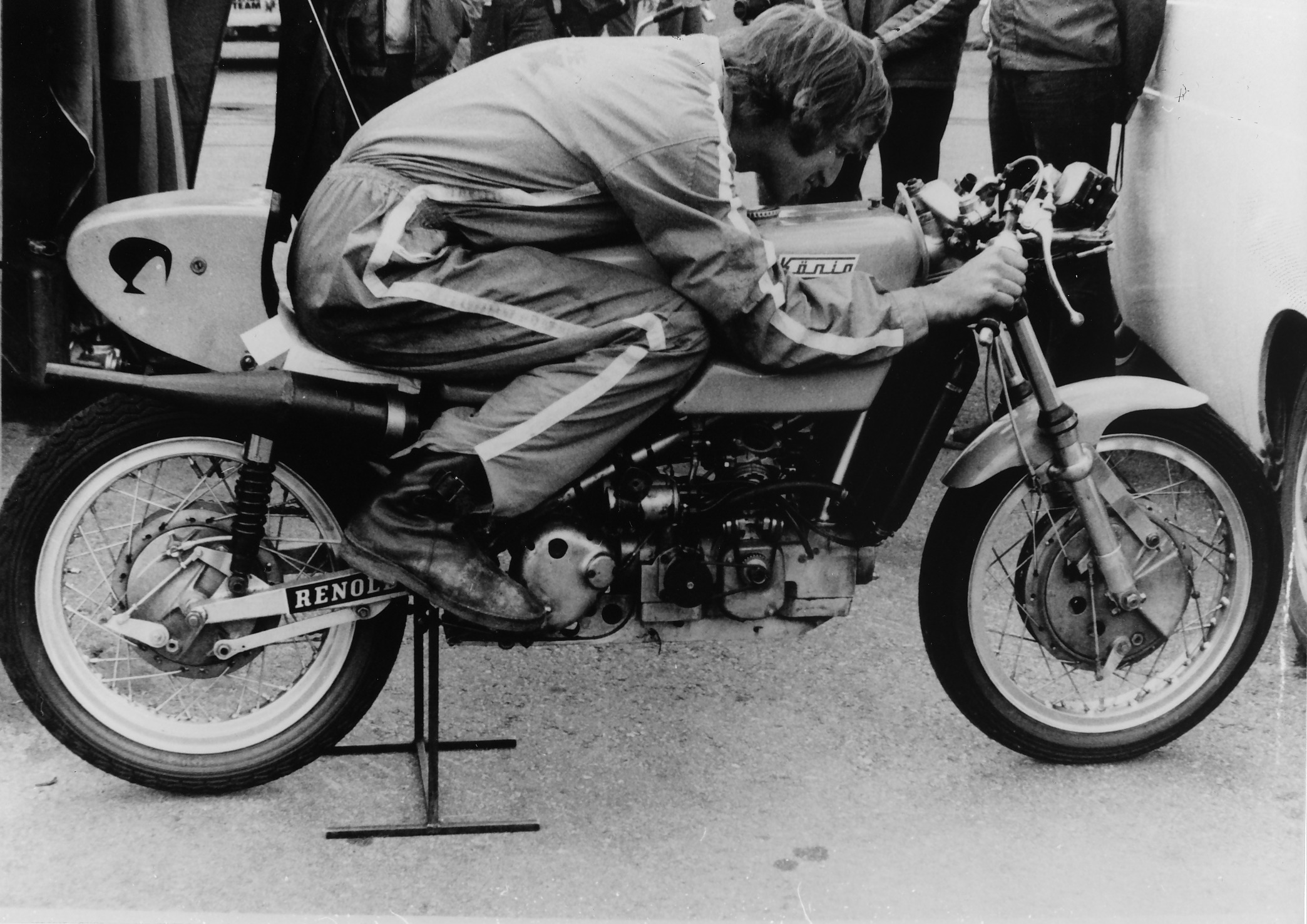
Kim and the Konig in the paddock at the Swedish Grand Prix. Note the Norton gearbox casing and the belt drive to the water pump and rotary disc valve.

Kim and the Konig in the paddock at the Swedish Grand Prix. Note the Norton gearbox casing and the belt drive to the water pump and rotary disc valve.

The water-cooled unit sat transversely across the frame with two cylinders pointing forward and the other two rearward.  The two right-hand cylinders fired together while the left-hand pair repeated the process 180 degrees later.  Basically like two flat-twins sharing a common crankcase and a single crankshaft.  The crankcase itself was split into two separate pumping chambers for each pair of opposed cylinders – a necessity for two-stroke breathing.

This enabled the use of a single large rotary disc valve on top of the crankcase for inlet timing, with a single inlet port for each pair of opposed cylinders.  The disc valve was driven by a toothed belt from the timing end of the crankshaft, and appeared somewhat fragile, as it had to run through rollers and make a ninety-degree turn.

Even the expansion chambers were shared – initially an agricultural looking single “canister” chamber with the front and rear pairs of cylinders siamesed into it.  This was later replaced with two conventional looking expansion chambers – one for each pair of front and rear cylinders.

Carburation varied from two East German BVF carburettors to a twin-choke 38mm downdraught Solex, and finally a pair of American 42mm Tillotsons.  The engine ran on petroil at an old-fashioned 16:1, although this was later changed to 20:1 using a vegetable oil.

All the internal components were quality West German products, with the crankshaft being a pressed up five-piece affair made by Hoeckle.  It rested on three main bearings – utilising a double ball on the timing end and two separate ball races on the primary side, with split-type caged rollers for the middle main bearing.  Caged roller bearings were also used for the connecting rod’s big-end, while the little-end used crowded needle rollers and shims on the piston pin to centralise the conrod.  The pistons themselves were forged high silicone Mahle items with a single chromed ring.  Bore and stroke were a classic ‘stroker 54x54mm although this was said to have changed during development to 50x56mm.

The ignition system was provided by a conventional battery, twin coil and dual points set-up, run off the right-hand end of the crank.

The main weaknesses with adapting a design intended initially for power boating was the lack of an in-unit clutch/transmission and getting enough water through a cooling system that was built for a limitless supply of cold sea water.

The clutch/gearbox problem was overcome by running a toothed Westinghouse chain off the left-hand side of the crankshaft (hence the reasoning to mount the engine across the frame), to a clutch and a Norton gearbox casing fitted with a Schaftleitner six-speed gear cluster.

The cooling problem was never solved entirely, and the engine did not like to get any hotter than 60 degrees.   A cast-finned sump was fitted underneath the engine to act as a reservoir for five litres of coolant that passed through a large radiator.  Newcombe experimented with slots in the fairing, which yielded some success, but just in case the Konig was never warmed up before a race so it could be taken to the starting line cold.

Kim hard at work on the Konig at Spa in Belguim.

Kim hard at work on the Konig at Spa in Belguim.

In its final 1973 form, the Konig had a chassis designed by Kim that used Ceriani front forks and drum brakes with Girling rear shocks.  By this time the engine was pumping out 85bhp at 9,800rpm (at the crankshaft) with the 680cc version giving 90bhp to 9,500rpm.  With a weight of only 139kg, the 500 was good for around 265kph!

Konig made eight bikes in kit form (less wheels and front forks), and for about the same price as a TZ350 Yamaha, a privateer could buy a potentially competitive 500cc or 680cc racer.

With Kim’s demise though, interest in the solo racer diminished.  The factory did, however, help Rolf Steinhausen and passenger Josef Huber in the sidecar championship, for which they were rewarded with a Konig engine winning both the 1975 and 1976 Sidecar World Championship.

Words Geoff Dawes (C) 1991. Photograph’s Mick Wollett, Jan Heese, Robyn’s Liege and Volker Rausch. Published 1993 Bike Australia, Classic Racer (UK) and Extra Editon Motorcyclist (Japan).

Going Seamless

When Casey Stoner won the final 800cc MotoGP World Championship for Honda in 2011, many a finger was pointed at the seamless gearbox Honda had developed as being a significant factor in the RC212V’s reinvigorated performance.  Shuhei Nakamoto, vice-president of Honda Racing Corporation,  believed it was more a matter of refinement in many areas of RC212V that had brought about the championship winning performance.

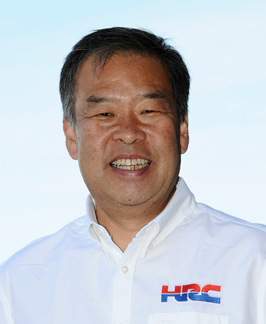
HRC Vice-President Shuhei Nakamoto

HRC Vice-President Shuhei Nakamoto.

But the seamless gearbox did raise the ire of the MotoGP commercial rights holder Dorna, who with the FIM, was on a crusade to cut costs and to close the performance inequity between the CRT teams and the factory prototypes.

Yamaha, however, is the last of the factory teams to adopt the technology as Ducati had already introduced their version of the seamless gearbox in late 2011. To the delight of its Grand Prix World Champions Jorge Lorenzo and Valentino Rossi, the M1 went seamless at Misano for the San Marino Grand Prix. It was a concerted effort by Yamaha to try and bridge the technology gap to Honda and to help Jorge Lorenzo claw back lost ground in the MotoGP World Championship battle.

So what are the benefits of this new technology? According to Valentino Rossi, “The bike is more stable in acceleration so it’s less demanding, so you can be more consistent and more precise, with less effort,” he added. “The only difference in setup is the electronics: you get less wheelie, so you need less wheelie control [which means more horsepower and more acceleration].”

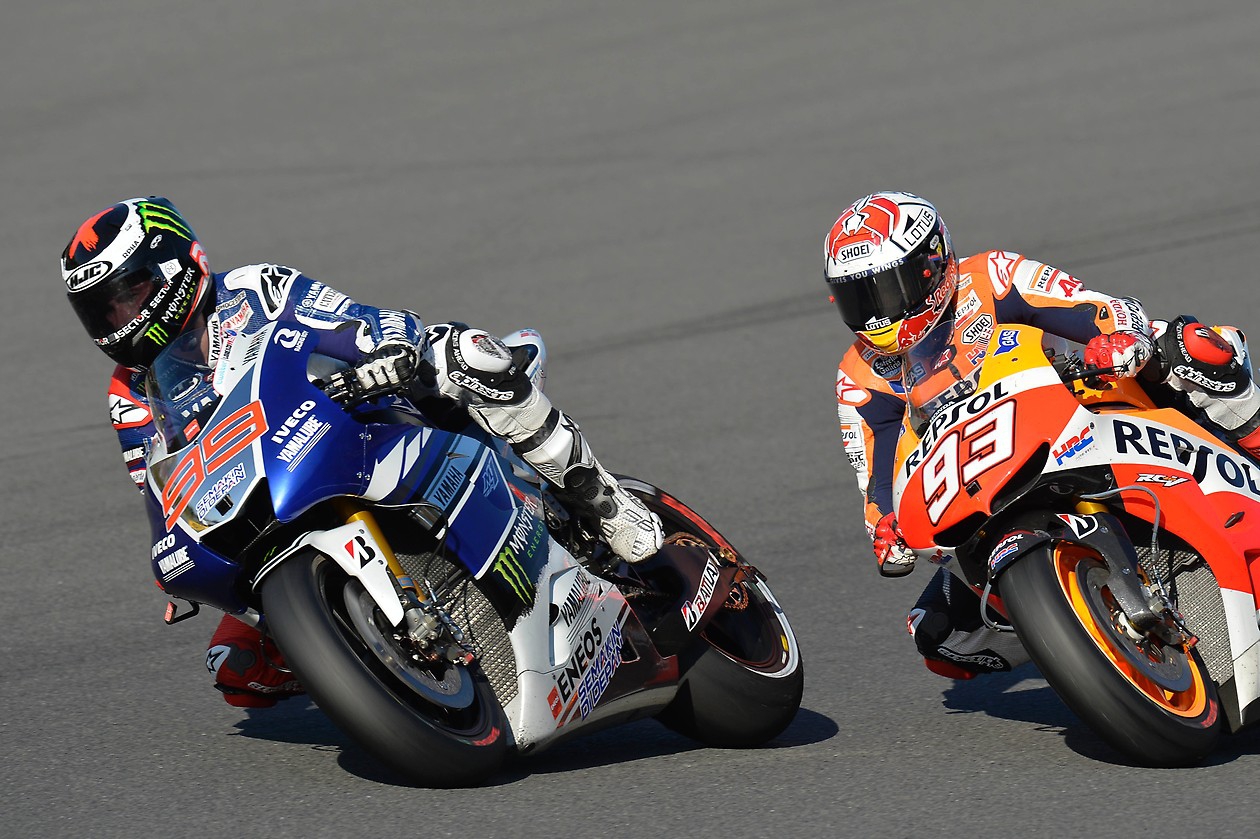
Rossi and Lorenzo were glad to have the seamless gearbox at Misano

Rossi and Lorenzo were delighted to have the seamless gearbox at Misano.

The fact that gears can be shifted without the split second loss of torque through the transmission that occurs with a racing speed shifter,  which momentarily cuts the ignition as another gear is engaged,  is the primary benefit.  With a conventional gearbox when the torque is reintroduced, it can load up the rear tyre and cause wheelspin or wheelies. which may also unsettle the front end of the bike. Also with a seamless gearbox down, changes are smoother helping engine braking with a more controlled front end under brakes.  Greater stability while changing gears mid-corner is another big benefit of the system.

How does it work? To put it in simple terms two gears are engaged simultaneously.  The torque is transmitted through the lower ratio, but as engine torque rises, the higher gear ratio is gradually engaged. When the higher gear is selected, the torque is transferred seamlessly to it.  The reverse is true of down changes. There are many subtle benefits of the gearbox.  Shorter gear change time, Improved tyre wear, more precise handling and less fatigue on the rider.

Yamaha managed to close the technology gap at Misano

Yamaha managed to close the technology gap at Misano.

The cost of developing the seamless gearbox is a mute point with Dorna who thought that they had all the bases covered when they outlawed automatic, CVT and twin-clutch transmissions, which is also the case in F1.  There is a certain amount of irony here concerning F1 which I will refer to shortly.

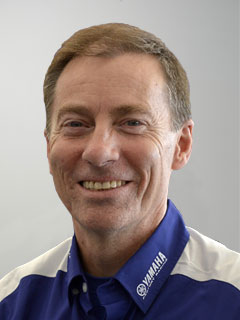
Lin Jarvis Managing Director of Yamaha Factory Racing towed the Dorna line initially saying that Yamaha would not have invested in the technology if Honda had not.  This in some ways is a strange approach as most manufacturers justification to go racing is to develop new technology that can eventually filter down to their production motorcycles.

Yamaha Factory Racing Managing Director Lin Jarvis.

Yamaha Factory Racing Managing Director Lin Jarvis.

Honda has quite openly been accused of spending a vast amount of money on their seamless system. But is this purely speculation?  This brings us back to Formula One.  The FIA outlawed automatic, CVT and twin clutch transmissions in the 1990’s, but for the 2005 season, the governing body deemed seamless gearboxes legal. One of the first cabs of the rank was the BAR Honda Formula One team who promptly announced they had developed such a gearbox for an introduction that season.

So seamless gearbox technology is not new to Honda having introduced it in F1 some six years before it appeared on the RC212V of the Repsol Honda Team in 2011.  It would, therefore, be safe to suggest that the cost to Honda for using existing technology would not have been as extreme as some would have us believe.

Considering Dorna’s close links with F1, it’s a surprising oversight that the move to seamless technology by Honda was not anticipated.

Words Geoff Dawes (C) 2013. Photographs courtesy of Repsol Honda Team and Yamaha Factory Racing.

Archives: Blue Bolide

The Suzuki holds its line and changes direction easily.

The scene is the final hour of 1988 24 Heures De Leige at Spa in Belgium.  Suzuki France lead rider, Herve Moineau, waits nervously in the pit, quietly preparing himself for his final session on the GSX-R750.  After 23 hours of racing his teammate, Thierry Crine is leading by just 15 seconds from the Honda France entry.  But it’s not just the race that’s being decided on the track it’s also the World Endurance Championship.

The Honda pits first, Bouheben climbing exhausted off the ’87 model RVF that team manager, Jean-Louis Guillou, has entered in preference to the less reliable ’88 version.  Alex Vieira mounts the Honda to the clak-clak-clak of chief mechanic Coulon’s air gun as the rear wheel is changed.  Only 11.5 seconds have passed when Vieira blasts out of the pits.

A lap later Moineau is staring intently down pit lane waiting for Crine to come in.  The blue overalled mechanics ready themselves as they know the slightest mistake can cost them the Championship.  Crine dives into pit lane and hands the GSX-R750 Suzuki to Moineau who is refuelled and out the pit in 6.27 seconds.  Suzuki Team Manager, Domonique Meliand, stands by the pit wall, stop- watch in hand, ready to time the split as Moineau flashes by on his first flying lap, before flicking left then right through Eau Rouge and out of sight – but where’s the Honda!

45 seconds later Vieira’s Honda drones past. Word spreads down pit lane that on the last lap of his stint, Bouheben, who had heroically made up 13 seconds on the Suzuki, dropped the Honda at the bus-stop chicane before handing the RVF750 to Vieira.

The race and the championship are Suzuki’s, beating their great adversary, Honda, in the last year before the series loses its World Championship status.

*          *          *

Later that month half a world away, at Sugo in Japan, Suzuki scores its first win in a new production based World Championship, the World Superbike Series, with its new J model GSX-R750.  Yoshimura pilot, Gary Goodfellow’s win, however, is put down to luck, as the first leg victory was more the result of a tyre gamble, and in the second leg, an oil spill affects the outcome of the race.  Suzuki know they are in trouble as the privateers complain about the F.I.M.’s stock carburettor ruling, bemoaning the J models 36mm slingshot CV carburettors that won’t let the engine run cleanly at the top end, and even Yoshimura is having trouble getting horsepower from the new short stroke motor!

*          *          *

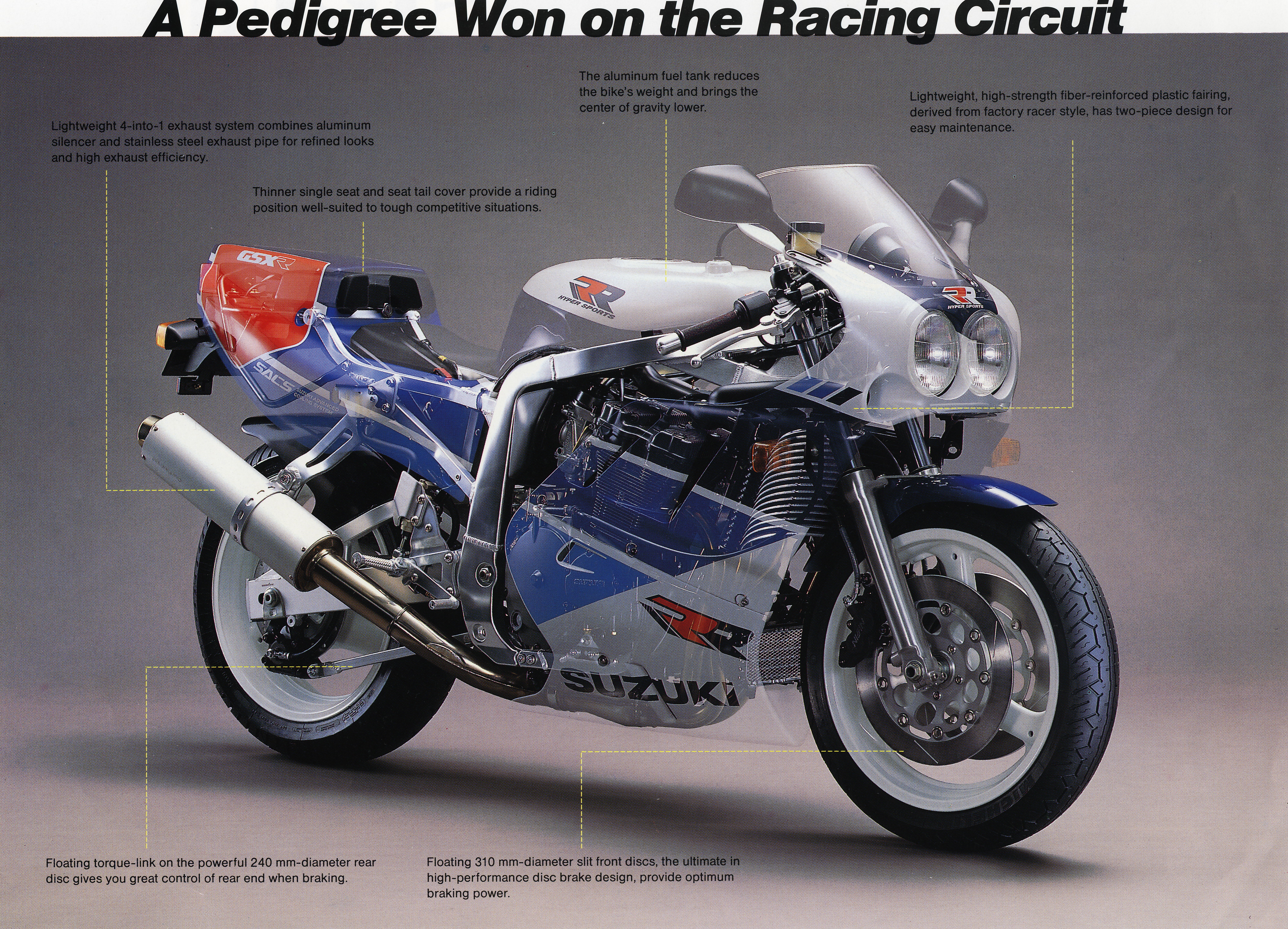
It was the culmination of these significant events that prompted Suzuki to produce a more competitive motorcycle for Superbike racing in 1989.   Taking a leaf out of Honda and Yamaha’s book, Suzuki has released the GSX-R750R, built specifically for Superbike homologation, and basically a road-going replica of Suzuki’s Endurance World Championship winning machine and its F1 racer.  Suzuki Australia brought 50 of these $19,950 beauties into Australia last September, with six earmarked purely for racing (no A.D.R. compliance and $500 cheaper) while the other 44 are fully road registrable.

Jeff Zammit, the owner of Adelaide’s Suzuki South, was kind enough to let Bike Australia borrow his personal GSX-R750R for a ride impression.  Jeff’s RR (I will refer to Jeff’s bike as the RR so as not to cause confusion with the standard RK model) had 800km on it when I picked it up but was fully run in after some careful kilometres on the road and a bit of stick on the race track.  But before we go any further let’s have a look at what makes the RR cost $11,000 more than its similar looking stablemate.

Suzuki looks purposeful but "pretty".

Suzuki looks purposeful but “pretty”.

The heart of the RR is its engine, and there are plenty of changes.  The carburettors are new BST 40mm CV items, up 4mm from the RK model and big enough to swallow birds and small dogs!  They feature easier resetting for race conditions and have a high-speed power jet which allows a leaner main jet for better mid-range throttle response.  Also improving throttle response is the atmospheric venting of the lower side of the carburettor diaphragm.  On the RK this is vented to the air-box where intake pulses can affect the pressure under the diaphragm and in turn throttle response.

A magnesium cover graces the factory-racer spec cylinder head, which features a valve system identical to the works racer and uses titanium nuts for valve adjustment.  Spark plugs are a new cold-type dual-electrode design by either NGK or ND with a smaller thread size of 10mm.  One reason for the change to a smaller thread size was to eliminate cracking in the combustion chamber that had occurred on RJ and some RK models used for Superbike competition.  The RR also returns to the four-into-one exhaust system of the earlier models but with a lightweight stainless steel design that uses an aluminium muffler.

Another significant change is the return to the old bore and stroke dimensions of 70.0mm x 48.7mm of the G and H model as opposed to the 73.0mm x 44.7mm of the shorter stroke J and K model.  One of the benefits the longer stroke provides is more time regarding crankshaft degrees for the cylinder to charge, which in turn increases port velocity.   The crankshaft is a high-rigidity lightweight unit, identical to factory racer, as are the conrods, which spins to the same 13,000rpm redline as the short-stroke RK model.  Horsepower has increased over the RK by 8ps  to 120ps at the same 11,000rpm and torque has improved from 7.9kg.m to 8.3kg.m again at the same 9,500rpm. The clutch has received an extra drive plate and the cooling system now features a curved radiator from the GSX-R1100 with a sub-cooler for the cylinder head to help deal with the increased thermal loads the optional $17,000 full race kit can create.

The chassis looks the same as the RK but has been strengthened around the steering head, and the swingarm is also heavily braced.  The front forks are of the inner- cartridge type, with beefy 43mm stanchion tubes that provide step-less spring preload and 12 positions for both rebound and compression damping.  A Showa remote gas shock is used at the rear with preload varied by screwing the spring collar up or down while a knob on the remote reservoir handles the compression damping and extension damping can be adjusted from the bottom of the shocker.  Wheel travel is 120mm for the front and 136mm at the rear, which is about par for the course for a serious sports bike these days.  Steering head rake is 30 degrees with 102mm of trail which is a bit slower than the RK’s 24 degrees 50 minutes and 99mm trail although the RR has a 5mm shorter wheelbase.

Racing riding position necessitates regular stops.

Racing riding position necessitates regular stops.

The Nissin four spot calipers of the RK set a high standard for its class and are retained at the front, but utilise slit-type floating disks from the GSX-R1100.  These are 5mm thicker than the RK’s and do a better job of drawing heat away from the pads, thereby reducing heat transfer into the calipers.  Wheels remain 17inches in diameter with the front the same 3.5inch width, while the rear is a massive 5.5inch job that takes advantage of Michelin’s latest fat low-profile road going radial and more obviously the current crop of racing slicks.  Tyre sizes are, up front an A59X 130/60 ZR17 and at the rear an M59X 170/60 ZR17.

The fairing is a quick-fastening two-piece affair of high cooling efficiency and low aerodynamic drag.  Suzuki has special sand-cast engine casings like those of the endurance racer to help reduce frontal area and give the RR a higher angle of lean.  The front fender and seat cowling are identical to the factory bike, and all the bodywork is made from fibre reinforced plastic that’s suitable for racing conditions.

The seat rear subframe is of aluminium/steel construction and for solo use only.  A nice touch is the maintenance free battery that resides under the seat and is canted back at about 45 degrees so it will fit the confined space.  It no doubt helps, in some small way, the centre of mass of the bike.  Also, the seat bum pad is removable and can be unlocked with the ignition key.  This reveals two small storage spaces, one of which houses the toolkit.  The fuel tank holds 19 litres – 2 less than the RK and is styled after the F1 and endurance bikes.

Visually the RR is quite stunning – purposeful, but with a rounded shape and curved lines that to my mind can only be described as “pretty”. It’s also very compact and weighs just 187kg dry (8kg less than the RK) which makes the RR seem smaller than its capacity suggests.

My first impression when riding the RR was of discomfort, as the seating position is pure G.P. racer.  The clip-on handlebars are slightly lower than the RK’s while the footpegs are mounted more rearward – that combined with the angled seat force the rider to assume a serious racing crouch.  That’s not a complaint, the whole purpose of the RR is to win races not cruise the main street. But while riding home from Suzuki South, along Adelaide’s bumpy Main South Road, the RR was telegraphing subtle messages that were all very positive.

Form and function.

Form and function.

Getting off the line takes a deft hand as the throttle is very light which makes it easy to feed in more revs than necessary, as the engine has minimal flywheel effect and responds instantly.  This is offset to a certain extent by the cable operated clutch which is smooth and progressive in its take up.  The tacho starts at 3000rpm, but the RR will take off with about 1000rpm less than this no problem, even though it runs a very high first gear.  Using the close ratio six-speed gearbox was a pleasure – even with only 800km of use.  The engine spins very freely with little vibration just a faint rumble at around 4000rpm in the higher gears that are felt through the footpegs and seat.  The RR will sit happily on 80kmh at just under 4000 revs in sixth gear and felt as though it would pull cleanly right up to its 13,000rpm redline.  In this sort of stop-start city riding the dual electrode spark, plugs showed their mettle, allowing the RR to pull away from traffic lights with only the occasional slight trace of a stumble.  I was quite surprised that the RR would tolerate such low revs and yet carburated so cleanly.

Another pleasant surprise was the suspension, which had been set-up by Jeff for fast road work yet handled the bumpy conditions well by giving a firm but compliant ride.  Two fingers were all that was required on the front brake as they are very powerful and combine with the riding position to make the rider feel sure the rear wheel is going to lift off the ground.  The fairing did quite an excellent job in the warm conditions too, managing to get the hot air from the engine away without scorching the rider. Some hot air is deflected by heat shielding under the fuel tank, however, onto the riders forearms when stopped at traffic lights.  I have to compliment Suzuki on the RR’s mirrors.  They are slightly convex, and an elongated oval in shape that gives a good view of the following traffic – not the riders elbows, nice one Suzuki.

It’s an understatement that the RR was not designed for the hostile environment of city commuting, but the Suzuki accredited itself surprisingly well (apart from the riding position), but to really get to know the RR better necessitates a more appropriate habitat.

The Adelaide Hills are crisscrossed with a great variety of scratchers roads, that vary from tight twisting turns to long sweeping curves – a natural place to head for with the RR.  In these conditions, the RR is in its element.  The Suzuki is so compact the rider can sense the centre of mass is just right, as the RR is so easy to flick into a corner, fast or slow, without any sign of top-heaviness that can affect an inline four in a double cradle loop frame.  The steering is razor sharp too, and it’s easy to place the Suzuki on the right line into a bend or change it mid-corner for that matter.

GSXR 750R in its natural habitat.

GSXR 750R in its natural habitat.

The engine is a real gem, it just loves to rev and gives such a linear power delivery that there is no real jump in performance.  On several occasion, when I managed to forget this was somebody else’s $20,000 motorcycle, my throttle hand got the better of me, and I ventured into this higher plateau of the RR’s performance.  Apart from the feeling that somebody had put the scenery on fast forward the RR handled up-rushing bends in exactly the same. way  A quick two-fingered squeeze of the powerful front disc brakes washed of excess speed, at the same time snicking down a couple of gears, tip the RR into the corner on the chosen line clip the apex and back on the power accelerating out.  No protests from the chassis or tyres just rapid progress.

On a couple of occasions, I did manage to get into a few corners a bit too hot and found that hauling on the brakes in a turn caused the RR to stand up and run wide, which on one particular off-camber corner caused the front-end to chatter.  However I put this down to a suspension set-up for someone else, and a too tentative response to the situation from yours truly.  High-speed stability was impressive also, the RR feeling rock steady in a straight line almost giving the impression of squatting down on the road as speed increased. The very effective fairing had a lot to do with this and made sustaining high speeds easy, helped no doubt by the tiny perspex screen which deflected the brunt of on-rushing air past the rider’s helmet with minimal buffeting.

Feeling at one with the exotic Suzuki GSXR 750R.

Feeling at one with the exotic Suzuki GSXR 750R.

Is it worth $20,000?  In my opinion, yes, it is that good. Suzuki has taken the evolutionary genes of their World Championship winning endurance racer and combined them with the DNA of their GSXR production model to create a racing thoroughbred.  But perhaps just as importantly it shows what good value for the money its slightly less race orientated stablemate the Suzuki GSX-R750K is.

Words Geoff Dawes (C) 1990. Photographs Geoff Dawes and Steve Frampton (C)1990. Published in Bike Australia May/June 1990.

Archives: Italian Masterpiece

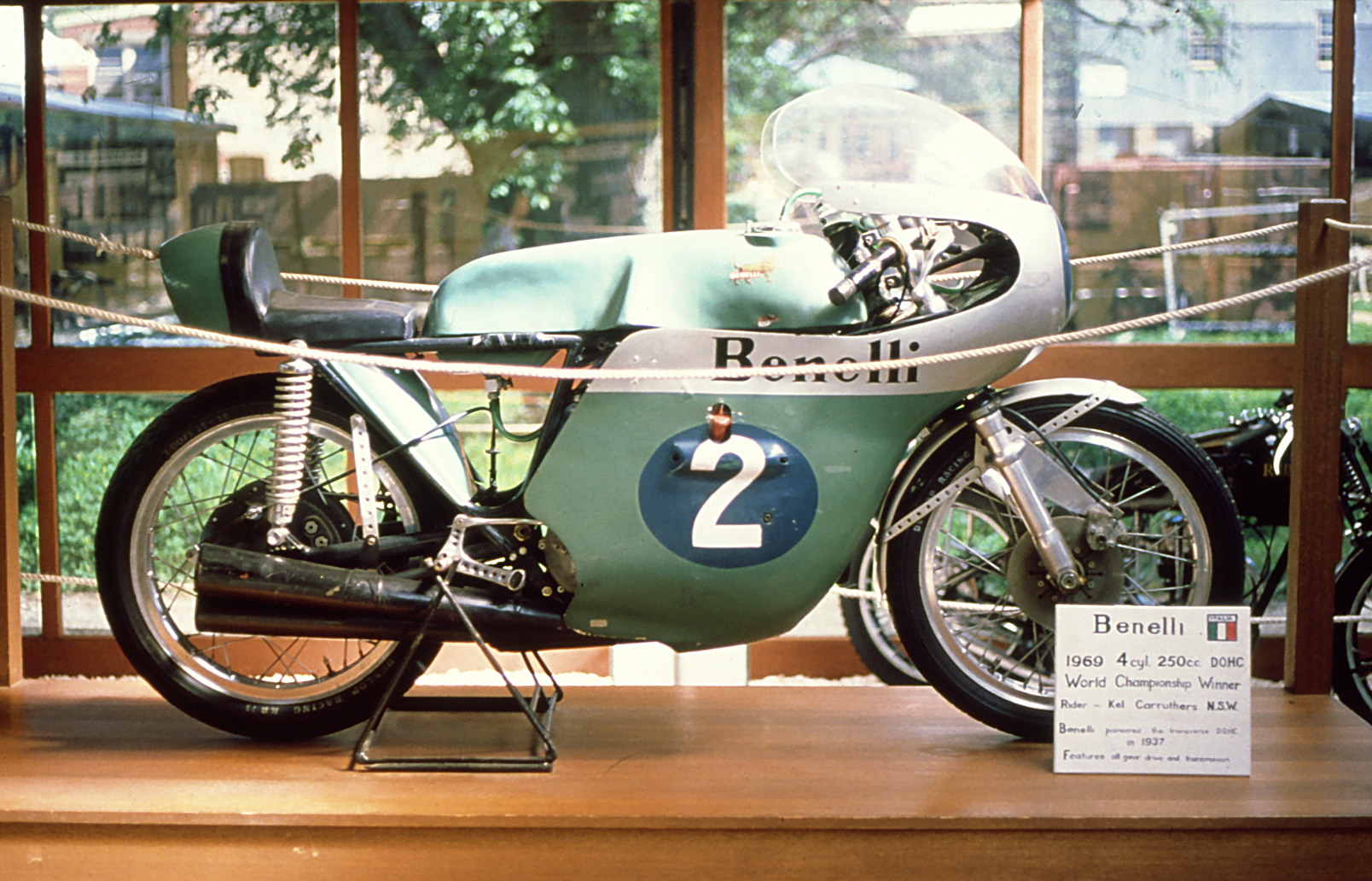
The 250cc Benelli G.P. racer on display at the Birdwood Mill National Motor Museum in the late 1980’s

It was in the mid-1970’s that I first stumbled across the exotic little Benelli 250cc GP bike.  I’d made my usual pilgrimage to South Australia’s motorcycling mecca, which at that time was Adelaide’s Pirie Street, where I spotted the green and silver racer.  It was prominently displayed in the doorway of one of the many motorcycle shops that had come and gone over the years and whose name now eludes me.  The price tag tied to the alloy clip-on handlebar said $3,200, which seemed a lot considering I’d paid “only” $1,800 for a new Z1 900 Kawasaki, although I had no idea at the time of how rare the Benelli was.

My second encounter was some years later during a visit to South Australia’s Birdwood Mill National Motor Museum, nestled in the Adelaide Hills.  Taking pride of place in the motorcycle display was the Benelli, but more surprising was a sign declaring it to be Australian Kel Carruthers’ 1969 250cc World Championship winning bike!

Over the years since that second chance meeting I’ve found the idea of a rare “works” racer – and a world championship winning one at that – finding its way into an Adelaide motorcycle shop extremely intriguing.

With my curiosity finally getting the better of me I decided to ring Jon Chittleborough, the curator of the motor museum, with the intention of putting together an article on the said GP racer.  Jon confirmed that the bike was still on display at the museum and that I was quite welcome to come along and photograph it.  But since becoming curator, he had been unable to confirm if the Benelli was, in fact, Carruthers’ championship winning bike as its past was somewhat foggy.

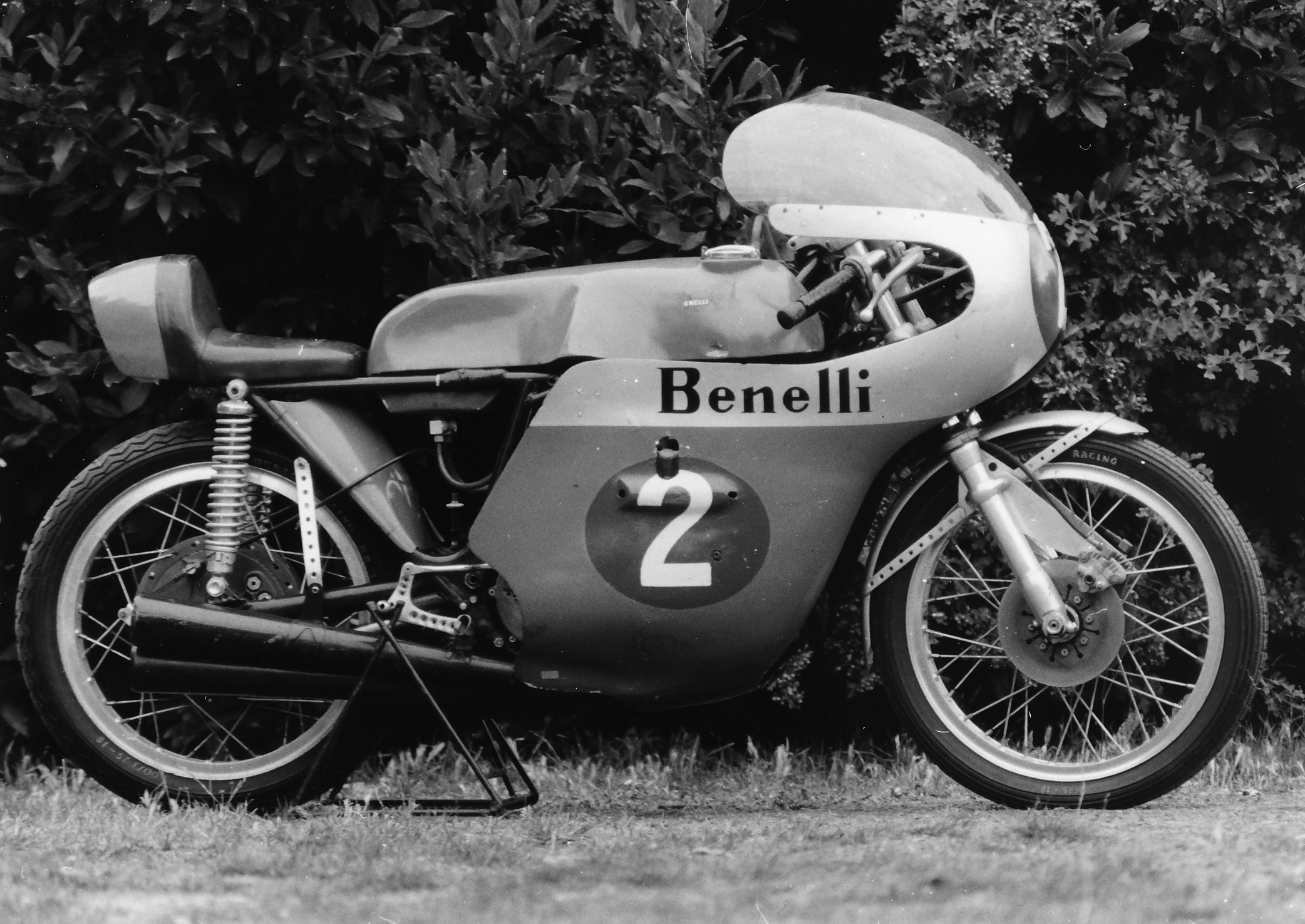
A masterpiece.

  A masterpiece.

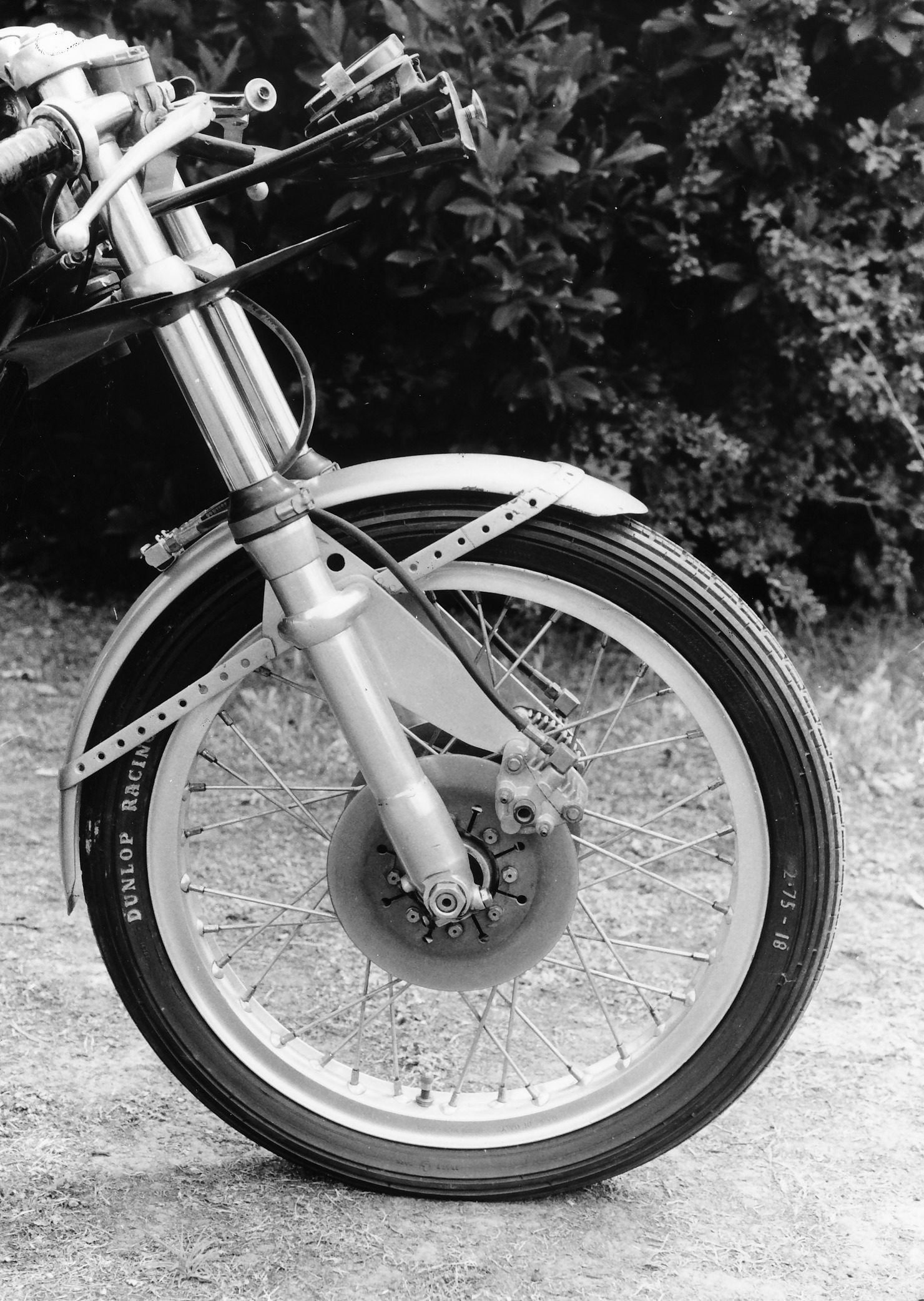
But before we go any further a brief description of the 250 fours, evolution is perhaps called for.   It was in mid-1960’s that Giovanni Benelli and Ing Savelli introduced an entirely new design four-cylinder 250cc GP machine that would eventually replace their ageing D.O.H.C. single.  In true fifties’ style the prototypes chassis was rather bulky and over-engineered, while on the other hand, the rim sizes were a narrow 2.590 x 18 front, with a matching 2.75 section rear.  The engine was a dry sump design with vertical cylinders, double-overhead camshafts and two valves per cylinder.  Bore and stroke measured 44 x 40.6mm for a capacity of 246.8cc, which was retained up to Carruthers’ world title-winner.  Benelli claimed 122kg (268lb) dry weight for the bike and 40bhp at 13,000rpm, which compared quite well with the contemporary Honda of the day.

Benelli continued to rely on an updated version of their D.O.H.C. single during 1961 while they refined the untried four, so it was not until 1962 that the Benelli made its racing debut in the hands of works rider Silvio Grassetti.  Many changes had been made to the machine since its first appearance, mainly the removal of the oil tank from under the seat in favour of a large-capacity bolt-on sump with a two-way pump mounted above it, and running off the camshaft drive pinion.  Ignition on the prototype had been by battery and four coils with the points driven off the end of the inlet camshaft.  This system had proved unsuitable as the four-lobe contact-breaker points tended to float at high rpm effectively reducing the engines ability to reach maximum revs.  A Lucas magneto was installed on the right front side of the crankcase and bevel-driven of the camshaft pinion, which also had the desirable effect of reducing weight. The chassis was also partly redesigned and slightly wider sections tyres fitted.

The Lucas magneto fitted to the earlier model of the 250cc GP racer.

The Lucas magneto fitted to the earlier model of the 250cc GP racer.

1964 saw the great Italian rider Tarquinio Provini join the team.  He had been runner-up in the previous year’s title riding a supposedly obsolete Morini single, only losing out at the last round in Japan to Jim Redman’s Honda four after each had won four races apiece.   The former two times world champions influence at Benelli was soon apparent with the factory completely redeveloping the bike.

The frame was made smaller and lighter helping to bring the overall weight down to 112kg (264lb) dry.  New camshafts were installed which raised the rev limit and narrowed the power-band giving 48bhp 14,500rpm.  To compensate for this, a seven-speed gearbox replaced the original six-speed unit.  Two pairs of 20mm Dell’Orto’s provided Carburation with a single flat-sided float bowl between each pair.  Provini was the first to reap the rewards of these changes by defeating the Honda, Suzuki and Yamaha factory teams at the opening European GP held in Barcelona’s Montjuich Park, although the rest of the season only produced fourth and two-fifth places respectively.

More alterations were made for 1965, with modified inlet and exhaust ports for better breathing, and new camshafts offering greater lift and dwell.  Combustion chambers and piston crowns were given more squish area, while more substantial 24mm carburettors were fitted with specially tuned bell-mouths that gave an extra 2bhp.  Usable power now started at 8,500rpm and lasted to 14,500rpm at which point it was producing 52bhp.  However, the most significant change came in the form of a new magneto from a Mercury two-stroke outboard motor, modified for four-stroke use.  The Lucas unit had been initially designed for the lower revving 350, and 500 fours produced by Gilera and MV in the 1950’s and proved unreliable when engine speeds went over 12,000rpm.  The American made unit solved the problem and was retained to the end of the model’s development, although some experimentation was done with an early form of electronic ignition.

Beautiful sand-cast engine cases.

 Beautiful sand-cast engine cases.

The chassis was also modified for 1965, being lowered and shortened even more, and equipped for the first time with disc brakes.  Benelli was one of the first in GP racing to adopt this now universal feature.  Unfortunately, the US made Airheart disc brakes were designed initially for go-kart use, and this, plus a lack of brake pad choice, resulted in the twin 7in discs being insufficient to stop a 112kg motorcycle at 143mph, which the Benelli was by then was capable of.  By the end of the season, the team had reverted to drum brakes all round, especially after suffering braking problems in the pouring rain during the Italian GP at Monza, which nonetheless did not stop Provini winning convincingly by lapping every other finisher on the Italian four.

Meanwhile, the desperate struggle for supremacy in the 250cc class raged between Honda and Yamaha, accelerating development of their race bikes.  Honda’s 250cc six-cylinder was now producing 60bhp and starting to handle thanks to the talents of Mike Hailwood.  Benelli had to do something if they were not to be left behind.

Ing Savelli’s answer was to introduce a stop-gap model in the winter of 65/66 with three valves per cylinder, using two inlet and one exhaust.  This helped to increase bottom-end torque but not top-end power, so inevitably a leaf was taken out of Honda’s book, and four valves per cylinder were adopted.  This narrowed the power band again but increased maximum safe revs to 16,000 and boosted the engine’s output to 55bhp.  It was on this machine, now painted slate grey instead of Benelli’s more colourful green, that Provini won their third consecutive Italian national title but failed to make any impression on the Japanese bikes in the Grands Prix.  Then tragically, while practising for the 1966 TT at the Isle of Man, Provini crashed and seriously injured his back ending a great racing career.

This was a severe blow to Benelli, but they decided to continue on and enlisted Aermacchi rider Renzo Pasolini for 1967, although it was not until 1968 that he started to show his full potential on the 250 by winning the Italian title and coming second in the TT.  By 1969 both Honda, Suzuki and Yamaha had withdrawn from GP racing giving Benelli perhaps their best chance at the title.  Pasolini proved as much by winning all seven races of the keenly contested Italian season-openers and was the pundits choice for the world championship.  Sadly, he crashed in practice for the second GP at Hockenheim and was injured seriously enough to miss the first three GP’s, including the important Isle of Man TT.

The Bennelli has a purposeful look.

The Benelli has a purposeful look.

The Spanish Ossa factories remarkable monocoque two-stroke single, in the hands of Santiago Herrero, easily led the championship, forcing Benelli team manager Nardi Dei to enlist the services of reigning world champion Phil Read and privateer Aussie Kel Carruthers’ for the TT.  Read retired during the race, but Carruthers’ swept to victory more than three minutes ahead of Frank Perris’ Suzuki.

Kel was rewarded with a place on the team for the rest of the season even after Pasolini returned to win the next GP in Holland.  By this time Herrero’s challenge had begun to wane, and it was left to the two Benelli riders to slug out the remaining rounds.  Unfortunately, Pasolini fell again in Finland putting himself out for the rest of the season.  Carruthers then became team leader, and his less powerful two-valve engine was replaced with the eight-speed four-valve unit, which he used to notch up two wins and two-second places in the remaining four rounds to take out the world title.

American made Airheart disk brakes were originally designed for go-karts.

American made Airheart disk brakes were initially designed for go-karts.

It was indeed the 250 fours swan-song, winning the championship at its last gasp.  The FIM in their wisdom had changed the rules at the end of 1969 for the 1970 season, limiting the 250 class to two cylinders and six gears, which also prevented Benelli from showing off its mind-boggling prototype 250cc V8 racer in public.

As the amiable Jon Chittleborough and I sat down in his office at the Birdwood Mill Motor Museum, it became apparent that there was quite a bit of mystery surrounding this particular Benelli.  Unfortunately, the racer was obtained when the museum was still in private hands, and there’s very little in the way of records to go by.  Jon has written to the Benelli factory in the hope of finding out a little more of the 250’s history, but regrettably Benelli English is even worse than the fabled Ducati English!

It is known, however, that the GP racer was brought into this country via Melbourne, probably by John Skepper of Zeltex Imports, who it’s thought was the importer of Benelli at that time.  The Museum acquired the Benelli as a straight swap for a 1927 DS Harley Davidson after the local agents were unable to sell it.  A previous employee of the Museum believed the Benelli was obtained from Carcycle (now Peter Stevens Motorcycles). But after checking with Mike Harris and Jim Russell (who had both been with Carcycle and its subsidiary sales team for over 20 years), this proved to be untrue, although Jim vaguely recalled seeing it for sale across the street in a shop that traded under the name of “Maintenance Services”.

Jewel-like engine is extremely compact.

The jewel-like engine is extremely compact.

Before the swap with the museum could go ahead, the importers had to get approval from the Benelli factory, which they did with the understanding that the 250 would not be raced.  This brings us to the next part of our mystery and probably the saddest part of the story.  The museums’ Benelli has had its engine entirely gutted. Whether this was done before the bike left Italy or after it arrived in Australia is not known for sure,. Although former road racer John Maher did tell the Museum he was offered a ride on the 250 GP racer by John Skepper when a Benelli 750cc six failed to show up in time for the Castrol Six-Hour production race.

It also confirms what I was told by the salesman at the motorcycle shop, who had assured me that the bike was still competitive with the production TZ Yamaha of the time.  This creates the possibility that the engine parts could still be lying around in a dusty corner of someone’s garage.

Riders cockpit.

Riders cockpit.

Perhaps the most contentious issue is whether the museums 250 was the one used to win the 1969 World Championship.  Both Jon and I agreed it was probably an earlier model, possibly 1965 as it’s fitted with the Airheart disc brakes, Lucas magneto, and “straight” megaphones of that vintage.  To add credence to this, about eleven years ago, Derek Pickard of Road and Race magazine visited the museum. He opined the view that it’s the bike that took Venturi to fourth place in 65/66 Italian Championships. Nonetheless, it’s still a very rare motorcycle. It even prompting seven times World Champion, John Surtees, to approach the museum in an attempt to acquire the 250 to add to the 500 he has on loan from the factory as there are very few “complete” 250cc fours in existence.

However, the museum would love to hear from anyone who can shed any further light on the Benelli, especially with regards to the missing engine parts as the museum would like to fully restore the 250.  The museum can be contacted by writing to The Curator, Australian National Motor Museum, Main Street, Birdwood South Australia 5234.

Words Geoff Dawes (c) 1989. Photographs Geoff Dawes (C) 1989. Published in the November 1989 issue of Bike Australia.

Archives: The Longest Mile

Bluebird k7 becomes airborne.

” Full power…tramping like hell here…I can’t see much and the water’s very bad indeed…I can’t get over the top…I’m getting a lot of bloody row in here…I can’t see anything…I’ve got the bows out…I’m going…Oh…”

It was over five decades ago, on January 4th, 1967, that British speed ace, Donald Campbell, lost his life to the cold dark waters of Lake Coniston in the English Lake District.  In a macabre sense, it was a fitting end to Britain’s most enigmatic record breaker and one that lifted him from a flawed hero into legend.

For Donald Campbell had appeared to be many things.  He was fiercely patriotic, extremely superstitious, generous and charming one minute, arrogant and uncompromising the next.  But to those who got close enough, Donald Campbell was full of a gnawing self-doubt that did not sit well with the popular belief of what a hero should be.

To understand this man that had broken the World Water Speed Record on seven occasions, and the Land Speed Record once, one has to search his past.

Born in 1921 the son of Sir Malcolm Campbell, Britain’s most successful record breaker, it was hardly surprising that he would one day try and emulate the man he hero-worshipped, even idolised.  But Sir Malcolm was a tough, overbearing, and some would say, cruel father, who had unrealistically high expectations for a son who did not shine academically at school, and who much preferred to be playing sport or working with his hands.

Bluebird CN7 sits poised on her built-in jacks.

Bluebird CN7 sits poised on her built-in jacks.

Indeed, the young boy afflicted with a nervous stutter barely survived a childhood fraught with accidents and illness.

At the age of eight Donald was taken by his father on an unsuccessful record attempt to South Africa, and upon returning to England contracted typhoid fever, which very nearly claimed his life.  Eight years later he came down with rheumatic fever, a debilitating disease that permanently damages the hearts’ valves, forcing the teenager to be wheelchair bound for many months.  Then the following year, he fell from his motorcycle and fractured his skull in two places.

When war broke out in 1939, Donald spent no time in enlisting for the RAF but was rejected when it was discovered he had suffered rheumatic fever.  This was an extremely low point in Campbell’s life.  His father, having served in the Royal Flying Corps during the First World War, was acting as a liaison officer in the Middle – East, while Donald filled in time as a special constable and a progress chaser between component manufacturers and aircraft constructors.

Donald was quoted as saying, “It appeared I was somewhat of a failure.  The Old Man was doing a real job of work, and here was I, playing at Policeman and having bloody silly accidents.”  The accident in question was between his motorcycle and an army truck, which resulted in a broken shoulder, two cracked ribs and a broken arm.

It was not until after the war, following the death of his father and the auction of his estate, that Campbell decided to don the mantle.  A friend of Sir Malcolm’s, Lt. Col. “Goldie” Gardner, visited Donald and told him of an American threat to his father’s World Water Speed Record.  Campbell had decided years earlier to follow in his father’s footsteps but had been reluctant to throw his hat into the ring while Sir Malcolm was still record-breaking, “The Old Man being what he is.”

Donald Campbell in discussion with Andrew Mustard at Lake Eyre.

Donald Campbell in discussion with Andrew Mustard at Lake Eyre.

Campbell immediately enlisted the help of Leo Villa, who had come to work as Sir Malcolm’s chief mechanic when Donald was only months old and was now almost part of the family.  There was no question that Villa would help.  He had always kept an eye out for the mischievous young Donald, whom among other things he had taught to drive and to dismantle a motorcycle engine.  Campbell would also continue another family tradition by naming his record-breaking car and boat, Bluebird, just as his father had, in honour of Maeterlinck’s play The Blue Bird.

Although Sir Malcolm had been a wealthy man, making his fortune as an insurance broker with Lloyd’s, he had left little money to Donald and his sister Jean.  Most of it was held in trust for Sir Malcolm’s grandchildren, granting only a modest ten-pound a week allowance to his own children.  Record-breaking had been an expensive hobby to Sir Malcolm, but for Donald finding enough money would always be a problem.

In fact, after six frustrating years of trying to break the record with his father’s old boat, Campbell was forced to sell his share in the successful engineering firm, Kine’s, and mortgage his home to finance a new design Bluebird hydroplane that would finally give him a new World Water Speed Record of 202.32mph in 1955.

In doing so, he had succeeded in breaking the hypothetical “water barrier”, claimed by its proponents to lurk at 200mph and cause such severe buffeting to the hull of a boat that it would eventually disintegrate.  Campbell had proven this to be wrong, and for the next five years, he continued to push the record higher, leaving it at 260.33mph.

Campbell's third wife Tonia Bern in an off guard moment at Lake Eyre.

Campbell’s third wife Tonia Bern in an off-guard moment at Lake Eyre.

However, the cost of his success on a personal level had been extremely high.  His first two marriages had failed, due in no small part to Campbell’s single-minded preoccupation with record-breaking.  He would marry his third wife on Christmas eve 1958, and outwardly, Tonia Bern, a well-known Belgian cabaret artist, seemed like an odd match.  But they were both determined, strong-willed characters, and Tonia understood that in an age of increasing commercial sponsorship, they were both, to a degree, in “show-business”.

But it was after his second World Water Speed Record on Lake Mead in the United States that the idea for Campbell’s most significant challenge gelled.

In 1947, Englishman John Cobb had set an outright Land Speed Record of 394.20mph which for years had stood unchallenged.  It now became Campbell’s obsession to recapture the record his father had held nine times.  He even toyed with the idea of breaking both the water and land record on the same day!

At this time Campbell’s stock had never been higher, and he was able to persuade, charm and cajole, eighty British companies to support his quest for the land record.

After a fanfare of publicity, in September 1960, Campbell took the enormously expensive gas-turbine Bluebird car to Bonneville Salt Flats and very nearly killed himself.

Campbell prepares to make another run at Lake Eyre.

Campbell prepares to make another run at Lake Eyre.

Anxious to get the record, he accelerated the massively powerful car too hard, too soon.  It became airborne at 360mph before slamming back down onto the salt track, bouncing back into the air then rolling over several times as it shed wheels and bodywork, before finally sliding on its belly to a halt.  Somehow though, Campbell had survived the world’s fastest automobile accident.

But the car was gone, a total write-off except for the gas turbine engine.  When it became known from Campbell’s hospital bedside that his first concern was the Bluebird car, and how soon he could have another crack at the record, his sponsors’ rallied.  Sir Alfred Owen, a hard-nosed north England industrialist whose company, Motor Panels, had been responsible for constructing Bluebird, immediately sent off a telegram offering to build Campbell a new car.

Bonneville Salt Flats, however, was no longer considered a suitable venue, the American track being considered too short to exploit Bluebird’s full potential.  Campbell’s longtime sponsor, British Petroleum, suggested an alternative.  It was a little-known salt lake in the far north of South Australia called Lake Eyre.

Base camp southern end of the lake.

Base camp southern end of the lake.

There had been a drought at Lake Eyre for seven years, but as soon as Campbell and his huge entourage arrived in the Australian autumn of 1963, the heavens opened.  The bad weather would plague the Bluebird team from that point on, eventually flooding the lake and causing the abandonment of the record attempt that year.

Then came another blow.  On August 5th, 1963 an almost unknown American set a new record of 407.45mph at Bonneville Salt Flats.  His name was Craig Breedlove, and his “car” was a three-wheeled device with a pure thrust jet engine called Spirit of America.  It did not, however, conform to the rules laid down by motorsports world governing body the F.I.A., and the record was not recognised officially.

But it did fire increasing criticism of the Bluebird Project.  Sir Alfred Owen arrived in Australia with a flurry of publicity, accusing Campbell of mismanaging the record attempt, while questioning his ability to drive the car to its full potential.  He also raised questions over who actually owned Bluebird.  Campbell retaliated by challenging Owen to a television debate and finally had his solicitor issue a writ for defamation on Sir Alfred in his Adelaide hotel.

More fuel was added to the fire, when later that year, Breedlove also arrived in Adelaide, and after examining Lake Eyre as a possible venue for his next record attempt declared he could go faster with a fraction of the money and support that Campbell had at his disposal.

Eventually, Campbell’s dispute with Owen was resolved, but by this time he found himself locked into staging the attempt at Lake Eyre.  So in 1964, he returned only to face the same problems with the weather, the car, and a team who had started to believe in a Campbell jinx.  Even Campbell’s ability to drive Bluebird was brought into question as rumours of a phobia of really high speeds persisted, because, it was said, of his Bonneville crash.

Campbell discusses problems with the track to his team.

Campbell discusses problems with the track after a run.

And indeed, Campbell’s approach was cautious.  The effects of the crash had taken their toll, and the possibility of damaging the car again must have weighed heavily on his mind.  But to the press and an increasingly sceptical public, Campbell no longer had what it takes.

To make matters worse, Andrew Mustard, a significant member of the team whom Campbell had contracted to build the track on Lake Eyre, and who was also responsible for the enormous Dunlop tyres fitted to the Bluebird car, became increasingly critical of Campbell’s reluctance to go for the record.  As Bluebirds nominated reserve driver, he began to openly offer to do the job himself.

More controversy erupted when the Confederation of Australian Motorsport officials, whose job it was to verify the record should it be achieved, insisted that Campbell have a medical examination on the grounds he was unfit to drive Bluebird.  A huge argument ensued, putting the whole record attempt in jeopardy until a compromise was reached and Campbell agreed to take the medical.

Weeks dragged past as trouble with the track, and the weather continued, until finally, on July 17th, 1964, on a track surface that was far from ideal, Campbell at last set a new official Land Speed Record of 403.10mph.

Longines timing photograph. The record at last.

Longines timing photograph. The record at last.

It was still, however, in the back of Campbell’s mind to try for “the double”, a feat not even achieved by his father, and plans were laid in Australia for an attempt on his own World Water Speed Record.

Lake Bonney at Barmera in the South Australian Riverland was tried, but poor weather made it unsuitable.  Lake Dumbleyung in Western Australia held promise, but problems again with the weather made it seem as though breaking both records in the same calendar year would elude Campbell.

The team had just about given up, when on the last day of 1964, with only three hours of light remaining, conditions improved sufficiently for Campbell to set a new World Water Speed record of 276.3mph.

This was to be Campbell’s swan song, for now, the world was looking to the heavens for its heroes.  The space race had generated a new breed of men, strapped atop enormous rockets, full of raw, explosive power, yet controlled with incredible precision by computers.  With almost monotonous regularity these men were tossed into space, orbiting the earth at over 26,000mph.

Bluebird K7 on display at Barmera in the South Australian river land.

Bluebird K7 on display at Barmera in the South Australian Riverland.

Donald Campbell became a man trapped between eras, belonging to neither.  Few were interested when he proposed a new rocket-powered car to break the sound barrier.  Science, it was said, not a man’s bravery, would now test the laws of psychics.

Perhaps then, on that cold winters morning at Lake Coniston, there was only one piece of equipment aboard the Bluebird hydroplane that could not have been scientifically perfected – only one component that was truly being tested to its limit and way beyond.  Perhaps it had always been, Donald Campbell himself.

Words Geoff Dawes (C) 1997. Colour photographs John Workman (C) 1964.  B/W photo’s courtesy Les Jackson.  Article published in Classic and Sports Car April 1997 and Australian Classic Car June 1997.